
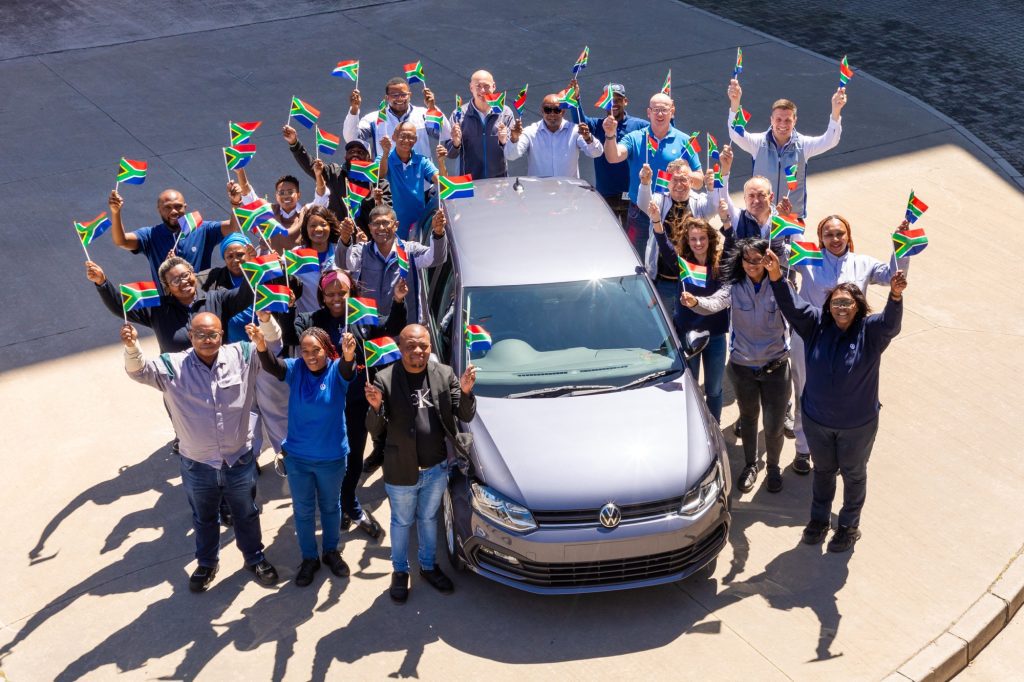
For nearly 75 years, Volkswagen’s manufacturing plant in Kariega, South Africa, has been a cornerstone of African automotive excellence. Now, that legacy has reached a historic milestone, the 3-millionth vehicle built locally. The proud moment was marked by the production of a smoky grey Polo Vivo, a model that continues to dominate South Africa’s passenger car market.
A Legacy Rooted in African Innovation
The Kariega plant, operated by Volkswagen Group Africa (VWGA), has been manufacturing vehicles since November 1948. Initially operating under SAMAD (South African Motor Assemblers and Distributors), the facility assembled models such as Studebaker and Austin before officially rolling out its first Volkswagen Beetle on 31 August 1951.
Since then, the plant has been home to some of the most iconic vehicles in Africa’s motoring history, from the VW Beetle and Citi Golf to the Jetta, Passat, and today’s Polo and Polo Vivo ranges. Each vehicle tells a story of progress, resilience, and engineering expertise proudly developed on African soil.
Three Million and Counting
The 3-millionth milestone represents more than just a number, it’s a testament to Volkswagen’s enduring presence in South Africa’s industrial landscape. Over the decades, Plant Kariega has produced models that have defined generations:
– VW Beetle (1951–1979)
– VW Type 2 Kombi (1955–2002)
– Audi and VW sedans and station wagons (1968–2001)
– Golf and Jetta models (1978–2009)
– Polo and Polo Vivo (2002–present)
Today, the plant builds the Polo, South Africa’s top-exported car in 2024, and the Polo Vivo, which has been the country’s best-selling passenger vehicle since 2010. Both models were recently celebrated at the Naamsa Accelerator Awards, reaffirming Volkswagen’s position as a market leader.
Driving the Future: The Tengo is Coming
Looking ahead, Volkswagen plans to begin local production of the Tengo, a new model set to become the brand’s next African icon.
“This milestone affirms Volkswagen’s legacy in Kariega and the South African market at large,” said Ulrich Schwabe, Production Director at VWGA.

“This plant has produced many icons over the past seven decades, from the Beetle to the Citi Golf and now the Vivo. We intend to make our Tengo the next icon when we start manufacturing it in Kariega from 2027.”
Building for Africa: From South Africa to Ghana and Beyond
Volkswagen’s African footprint extends beyond South Africa, it started with the Polo and now the Polo Virtus, this is now assembled in Ghana to serve the Ghanaian and wider West African market. These vehicles are built at the Kariega plant and shipped as semi-knocked-down (SKD) kits to Volkswagen Ghana’s assembly facility in Accra, where they are locally assembled under the Ghana Automotive Development Policy. This strategic collaboration underscores Volkswagen’s commitment to deepening Africa’s automotive value chain, creating local jobs, transferring skills, and making new, high-quality vehicles more accessible to African customers. The Polo and Virtus have quickly earned a reputation across the sub-region for their durability, comfort, and efficiency, embodying the spirit of African-built excellence that began in Kariega.
Ryde Channel was present at the launch of the Volkswagen Polo Virtus, and it’s easy to see why this model has quickly become a favorite among buyers. The value proposition is remarkably strong, combining understated design with impressive equipment levels and solid build quality. Though built in Africa, the Virtus unmistakably carries its German engineering DNA, delivering the refinement, comfort, and reliability that Volkswagen is known for. A mid-spec Volkswagen Polo Virtus Highline is priced at around GHC 250,000. It comes equipped with features such as wireless charging, wireless Android Auto and Apple CarPlay, a rear-view camera, and more.
A Symbol of African Industrial Strength
From humble beginnings in the late 1940s to being one of Africa’s most advanced vehicle production hubs, the Kariega plant continues to shape the continent’s automotive story. Beyond building cars, Volkswagen has been instrumental in job creation, skills development, and export growth, proving that African-built vehicles can compete with the best in the world.
The celebration of three million vehicles is not just a company milestone, it’s a continental achievement, reminding the world that Africa is driving its own future, one vehicle at a time.

Leave a Reply