Honda has unveiled a new generation of its legendary Africa Twin, bringing more power, improved technology and three distinct versions. But has it finally added the excitement we’ve always felt was missing?
There are motorcycles that thrill you, others that intimidate you, and then there are motorcycles that make you feel you could ride to the ends of the earth without a second thought.
The Honda Africa Twin has always belonged firmly in that last category.
When Honda revived the legendary Africa Twin in 2016, we featured it on Ryde Channel. It impressed us with just how thoroughly competent it was. Comfortable, beautifully balanced, confidence-inspiring and remarkably capable off-road, it seemed to have an answer for almost everything an adventure rider could throw at it.
But there was one thing. It was a little too tame!
Don’t get us wrong. The Africa Twin’s predictable handling, accessible power and reassuring manners were among its greatest strengths. Honda had created a motorcycle that made serious adventure riding feel almost effortless.
Yet, for those of us who appreciate a little drama, it sometimes felt like the sensible friend who never gets into trouble.
Now, Honda has unveiled the 2027 CRF1150L Africa Twin, and things are looking rather interesting.
What’s New?
The biggest news is a larger 1,131 cc parallel-twin engine, replacing the previous 1,084 cc unit. Power increases from approximately 102 PS to 119 PS, while torque rises from 112 Nm to 119 Nm.
That’s roughly 17% more power, and hopefully a little more excitement when you twist the throttle.
Honda has also revised the chassis, shaving 1.4 kg off the combined frame and swingarm weight. Part of the fuel storage has been relocated beneath the seat to lower the centre of gravity, promising improved balance and easier handling.
Updated electronics, new instrumentation, refined ergonomics and improved suspension systems complete the overhaul.
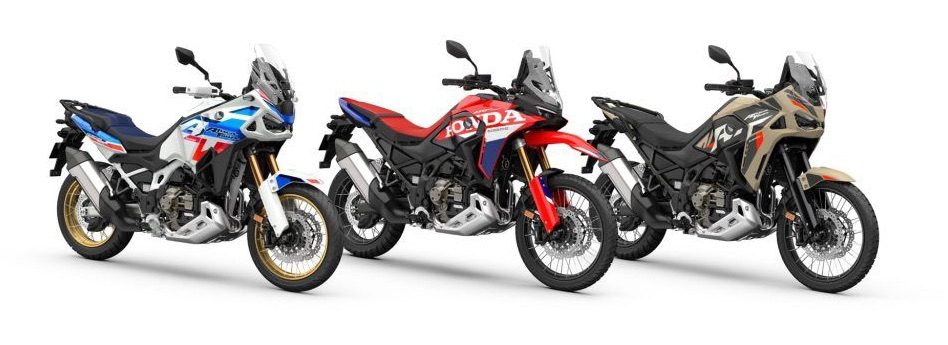
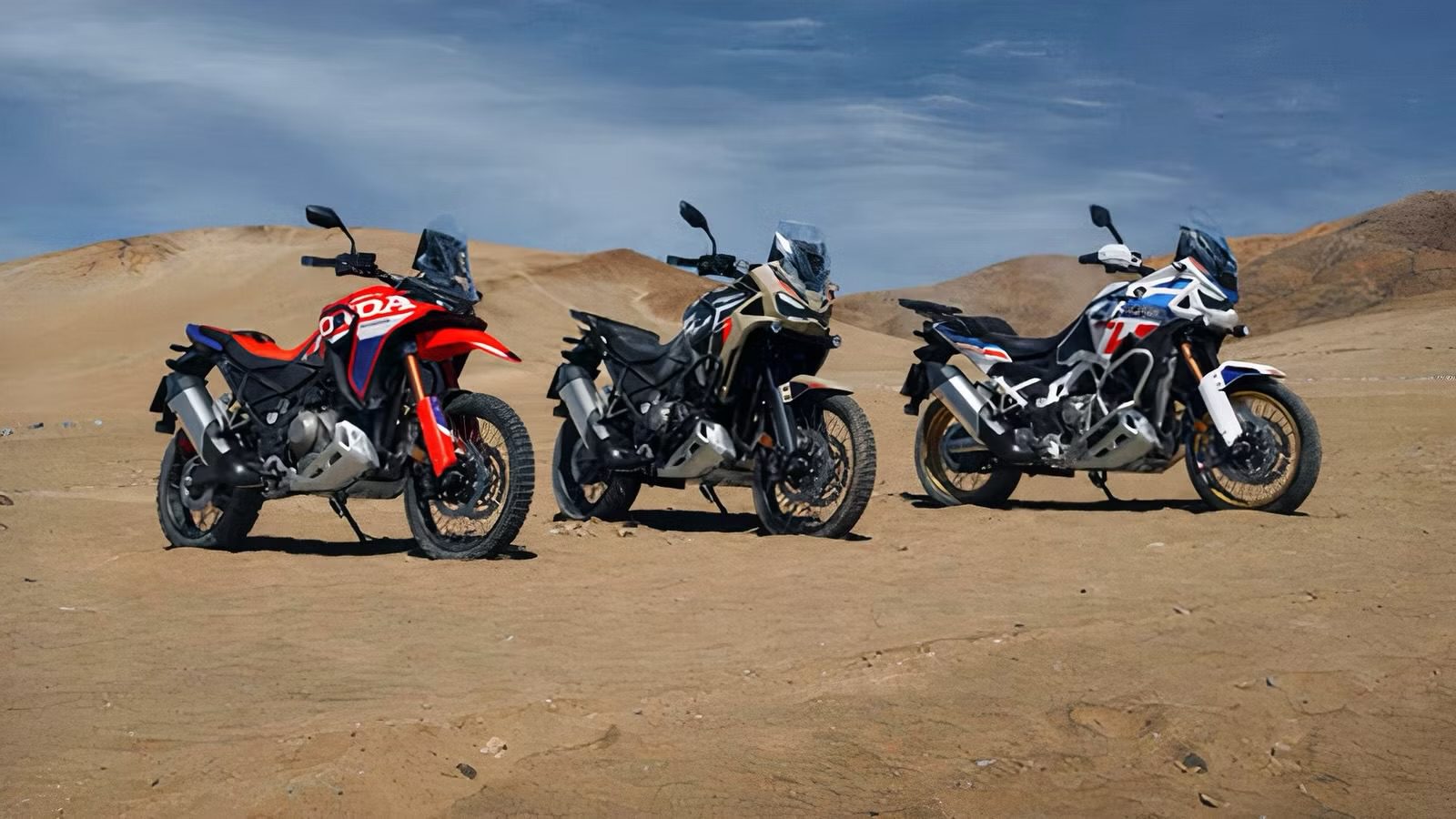
Perhaps most importantly, Honda has divided the Africa Twin family into three distinct versions, each catering to a different kind of adventure rider.
1. Africa Twin: The Brilliant All-Rounder Gets Sharper
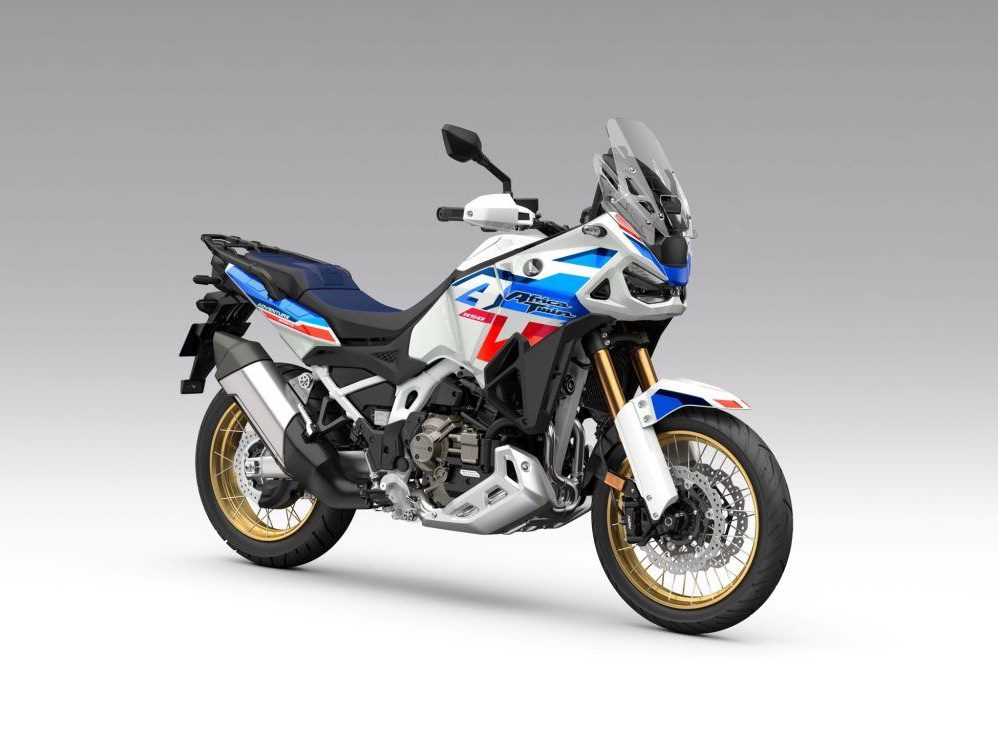
The standard Africa Twin remains the do-it-all machine. It’s equally at home covering hundreds of kilometres on the highway or exploring the gravel roads that begin where the tarmac ends.
It retains the familiar 21-inch front and 18-inch rear wheels, but now benefits from the more powerful engine, revised chassis and lower centre of gravity.
Honda has also equipped it with Showa EERA electronically controlled suspension, featuring Skyhook technology that continuously adjusts damping to suit riding conditions.
Suspension travel is 210 mm at the front and 200 mm at the rear, with an adjustable seat height of 850–870 mm.
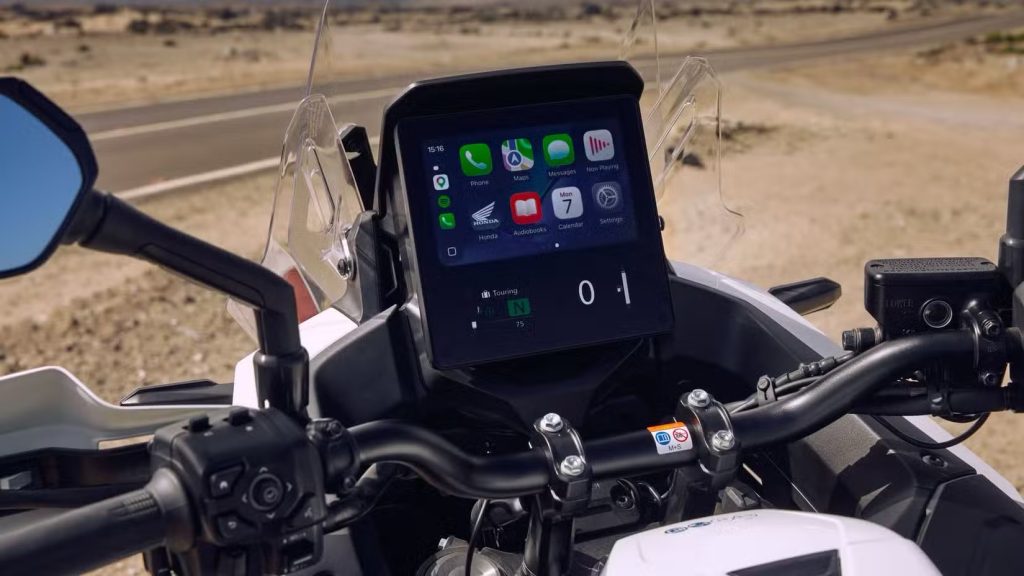
Other highlights include an electrically adjustable windscreen, cruise control, Smart Key, updated LED lighting and a new dual-screen dashboard. Wireless Apple CarPlay and Android Auto add convenience for everyday riding and longer adventures.
There are six selectable riding modes, including a new Offroad+ setting, while the 18.8-litre fuel tank provides a claimed range of approximately 370 km.
At 237 kg in manual form, it’s hardly a lightweight, but Honda’s revised weight distribution should make those kilograms easier to manage.
A six-speed manual transmission and Honda’s DCT automatic are available.
The standard Africa Twin remains the sensible choice, only now with a little more muscle.
2. Africa Twin Adventure Sports: Built to Cross Continents
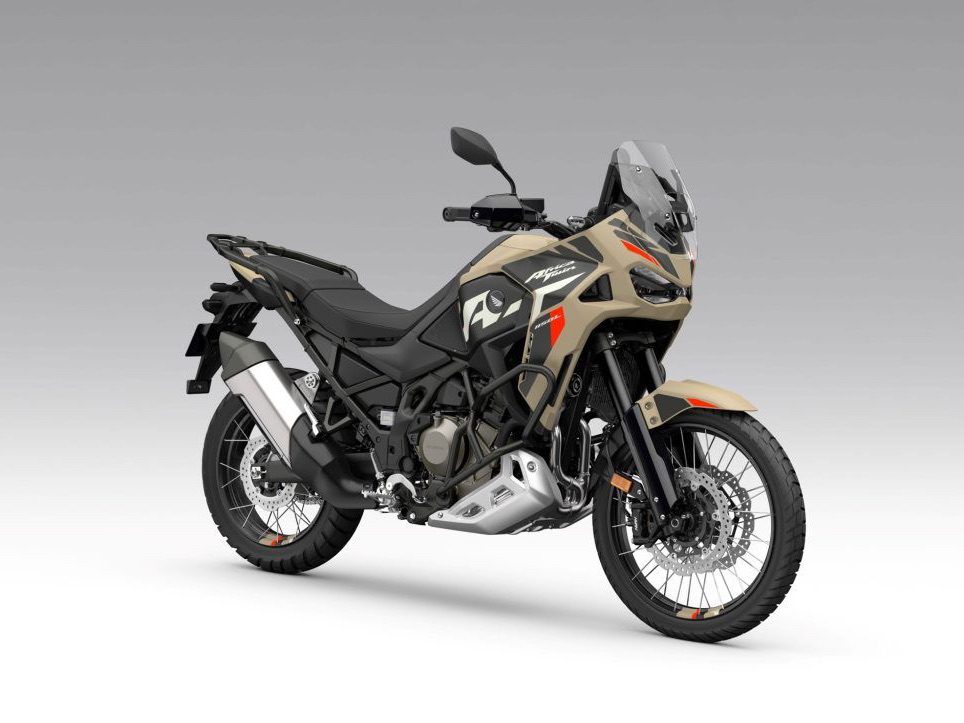
If the standard Africa Twin is the all-rounder, the Adventure Sports is for riders who consider a 500 km day in the saddle a perfectly reasonable way to spend a Saturday.
Designed for long-distance touring, it features a larger 24.2-litre fuel tank, delivering a claimed range of approximately 480 km.
Its 19-inch front wheel gives it a more road-oriented character, while the lower 830–850 mm adjustable seat height, electronic suspension and improved wind protection make long journeys more manageable.
But its biggest talking point is Honda SENSING RIDE, an advanced radar-based rider-assistance system available on the DCT version.
Using front and rear radar sensors, the system introduces adaptive cruise control with Stop & Go functionality, blind-spot monitoring, collision warnings and Group Ride Assist, which helps maintain appropriate distances when riding with others.
There’s also emergency braking assistance, although the rider remains responsible for controlling the motorcycle.
It’s technology we’re more accustomed to seeing in modern cars, now finding its way into adventure motorcycling.
For riders covering serious distances, these features could help reduce fatigue and improve situational awareness.
The Adventure Sports is clearly designed for riders who want to explore the world without having to rough it quite so much.
3. Africa Twin Enduro Sports: Finally, Some Attitude?
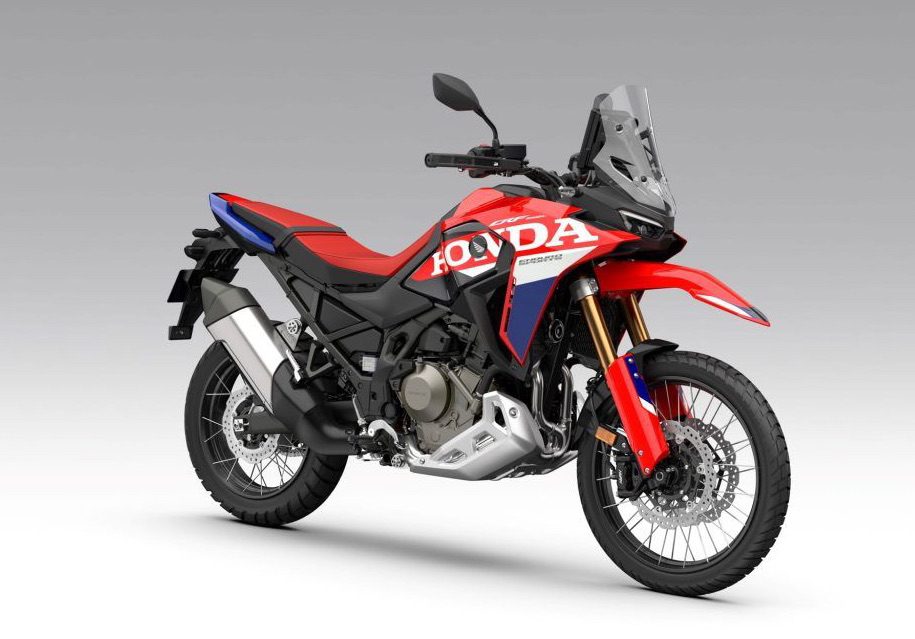
Now, this is the one that really caught our attention!
Honda has introduced a new Enduro Sports version, taking inspiration from its Dakar Rally-winning CRF450 RALLY machines.
Unlike its more touring-oriented siblings, the Enduro Sports prioritises off-road performance.
It uses fully adjustable mechanical Showa suspension rather than electronic suspension, with a 49 mm closed-cartridge front fork offering 240 mm of travel and a rear shock providing 230 mm.
Ground clearance increases to 260 mm, while the adjustable seat height sits between 870 mm and 890 mm.
At 228 kg in manual form, it is 9 kg lighter than the standard Africa Twin.
It retains the off-road-friendly 21-inch front and 18-inch rear wheels, while a high-mounted front mudguard, compact windscreen, slimmer bodywork and HRC-inspired styling give it a more aggressive appearance.
Honda also offers accessories including rally footpegs, a quickshifter and an SC-Project Rally exhaust.
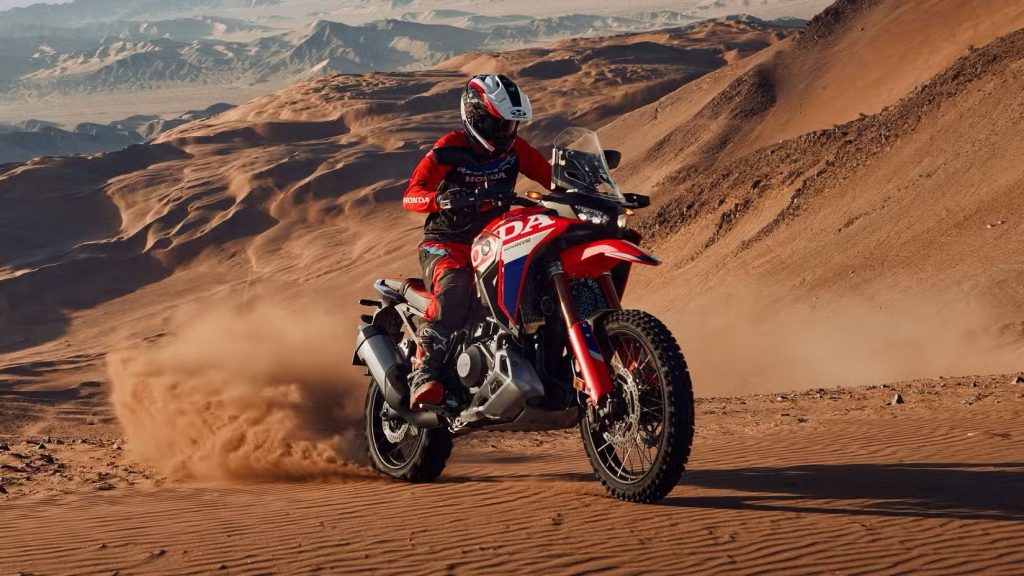
The Enduro Sports still shares the 119 PS engine and modern electronic rider aids with its siblings, but its suspension, lower weight and more purposeful design suggest a motorcycle intended for riders who actively seek out difficult terrain.
It’s certainly the most exciting-looking member of the family, and perhaps the one most likely to answer our longstanding complaint about the Africa Twin being a little too well-behaved.
Has Honda Found the Missing Ingredient?
What makes this announcement interesting isn’t simply the extra horsepower. It’s Honda’s decision to give the Africa Twin three distinct personalities.
The standard Africa Twin remains the versatile all-rounder. The Adventure Sports takes comfort, range and technology further, while the Enduro Sports promises a more focused off-road experience.
For riders in Africa, where a journey can take you from smooth highways to broken tarmac, gravel and deeply rutted tracks, that versatility makes plenty of sense.
But we’re particularly curious about the Enduro Sports.
Can Honda retain everything that makes the Africa Twin so approachable while finally giving it the sharper, more playful personality we’ve always wanted?
Or is it still the sensible friend, now wearing rally boots?
We’ll reserve our verdict until we get the opportunity to ride the new machines ourselves.

Leave a Reply