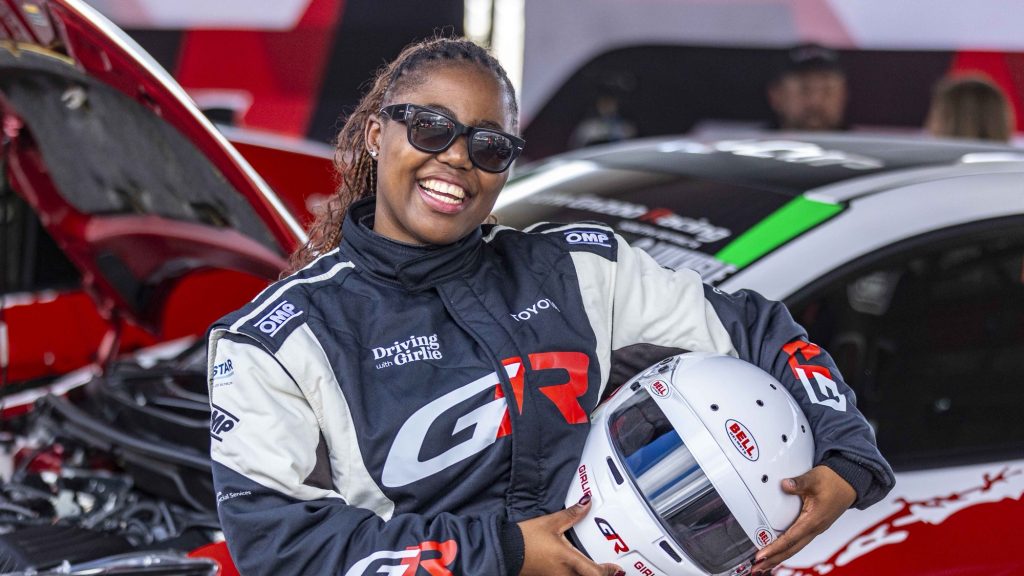
There’s something fascinating about watching someone dominate a racing simulator online and wondering: what if they got a shot in the real thing?
That thought kept ringing in my mind the first time I came across Yolanda “Girlie” Lukhele’s content on social media. She wasn’t just casually playing racing games. She drove with intent, precision and confidence, making every onboard clip feel like a live motorsport broadcast. It was exciting to watch. The kind of content that makes you pause mid-scroll and think, this person could actually race.
Well, that opportunity finally came. And she delivered.
At Round 3 of the 2026 TOYOTA GAZOO Racing South Africa GR Cup at Zwartkops Raceway, Lukhele swapped her sim rig and rally stages for real-life wheel-to-wheel circuit racing as part of the new Toyota GR Cup Hot Seat programme. And instead of merely participating, she walked away with two podium finishes in her debut weekend.
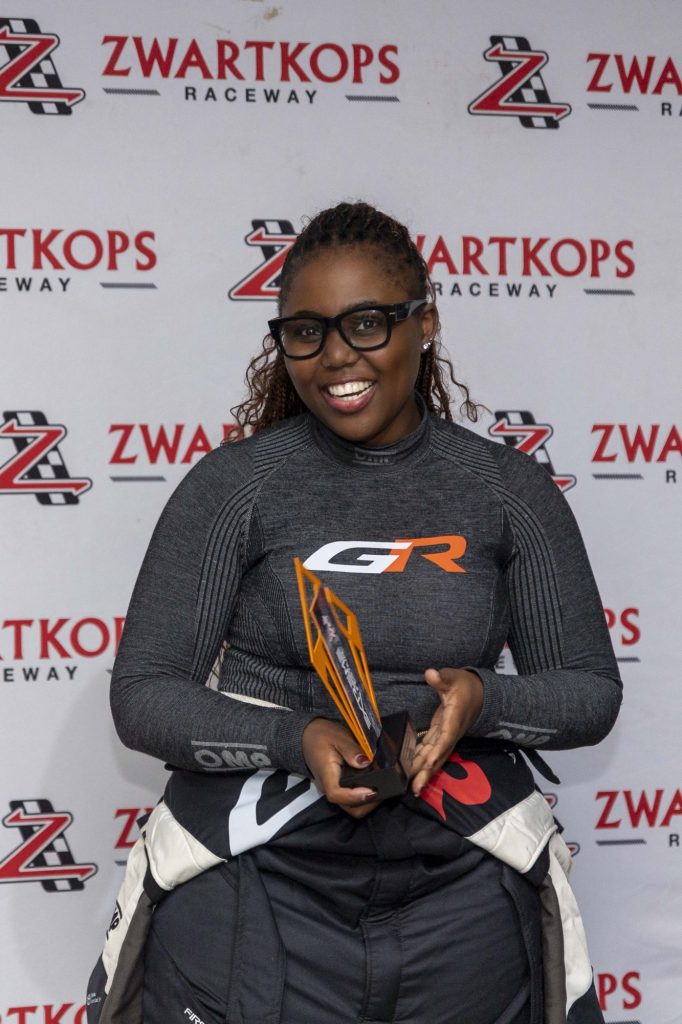
For anyone who has spent time in sim racing circles, this moment felt bigger than just another guest driver appearance. It was a glimpse into how virtual motorsport is increasingly becoming a legitimate gateway into the real thing.
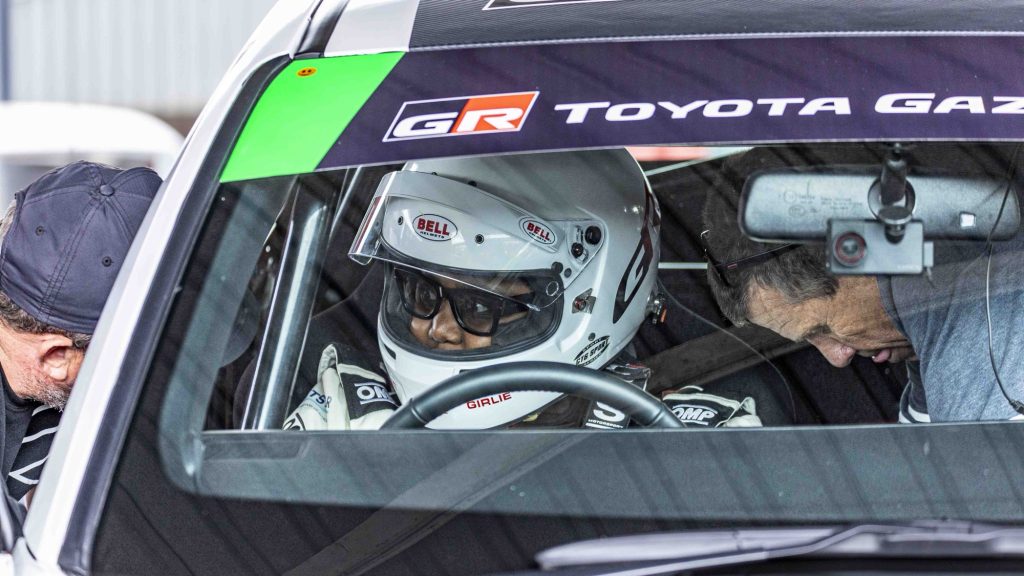
Lukhele joined the highly competitive GR Cup Media Challenge field in the GR Yaris AT. While she already had some rally experience, circuit racing introduced an entirely different level of pressure. Zwartkops Raceway is no easy place to learn either. The Pretoria circuit is fast, technical and unforgiving, demanding precision through flowing corners, heavy braking zones and close racing battles.
Friday’s practice sessions took place under cool and cloudy conditions, allowing Lukhele time to settle in and understand the car. By Saturday morning, under clear skies, it was time to qualify.
She immediately impressed.
Lukhele secured fifth place in qualifying before going on to claim third place in class in both Race 1 and Race 2. Two podium finishes in her first-ever GR Cup appearance was more than impressive.
But beyond the results sheet, the weekend revealed the emotional intensity that sim racers often don’t get to experience from behind a screen.
“To sum up the GR Cup, wow, it was phenomenal,” Lukhele said after the event. “It was honestly an out-of-this-world experience.”
She also highlighted how welcoming the motorsport environment was throughout the weekend.
“What stood out for me the most was how welcoming everybody was. The service crew, the drivers, everybody was so friendly and willing to help me improve. The drivers kept giving me advice, telling me where I could improve, and encouraging me throughout the weekend.”
Lukhele admitted that circuit racing quickly exposed her to the emotional highs and lows that define competitive motorsport.
“One moment you have a great race or lap, and the next moment something goes wrong or you feel like you could have done better,” she explained. “I really experienced the highs and lows of track racing this weekend.”
The support from fans also left a strong impression on the rookie racer.
“I’m so grateful for everybody who came out to support me. Seeing people cheering from the stands, waving and encouraging me really kept me going, especially during moments where I doubted myself or felt disappointed after a session.”
Importantly, this wasn’t just a one-off publicity stunt. Toyota’s GR Cup Hot Seat initiative appears genuinely focused on exposing new personalities and untapped talent to motorsport in an accessible and meaningful way.
And Lukhele’s performance may have just validated the concept entirely.
Interestingly, this growing blend of digital motorsport, content creation and real-world racing is something we’re seeing more often globally. The line between sim racers, creators and actual racers is becoming increasingly blurred. Skills developed on simulators, especially racecraft, consistency and track awareness, are proving more transferable than many traditional motorsport fans once believed.
Lukhele’s success also comes at a time when African motorsport storytelling is becoming more diverse and relatable. Fans are no longer only following professional racers with factory-backed careers. They are connecting with personalities they discovered online, watched grow and can genuinely relate to.
It’s the same energy motorsport fans recently saw from personalities like Kumbi M and Willem Van De Putte, both of whom continue to bring fresh enthusiasm and accessibility to the scene through content and participation. The paddock suddenly feels more open than ever before.
And perhaps that’s what made this moment special.
A social media sim racing enthusiast was given a real shot in a real race car. Instead of being overwhelmed, she adapted, competed and stood on the podium.
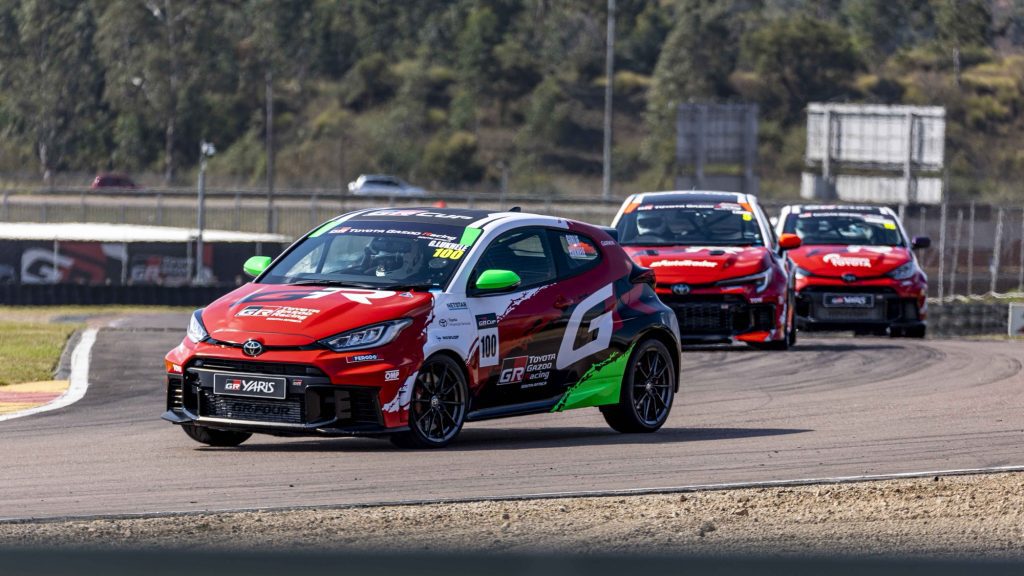
The GR Cup Hot Seat programme continues later this season with broadcaster Kriya Gangiah set to race at Killarney Raceway in September, before sports broadcaster Mpho Maboi takes her turn at Zwartkops in October.
The GR Cup itself has quietly become one of South Africa’s most exciting grassroots motorsport platforms. Built around Toyota’s performance-focused GR lineup, the one-make racing series combines accessibility, close competition and personality-driven storytelling, bringing together professional racers, motoring journalists, broadcasters and now content creators on the same grid. Using identical GR Yaris machinery also places greater emphasis on driver skill, racecraft and consistency rather than outright mechanical advantage, making standout performances like Lukhele’s even more impressive.

Leave a Reply