
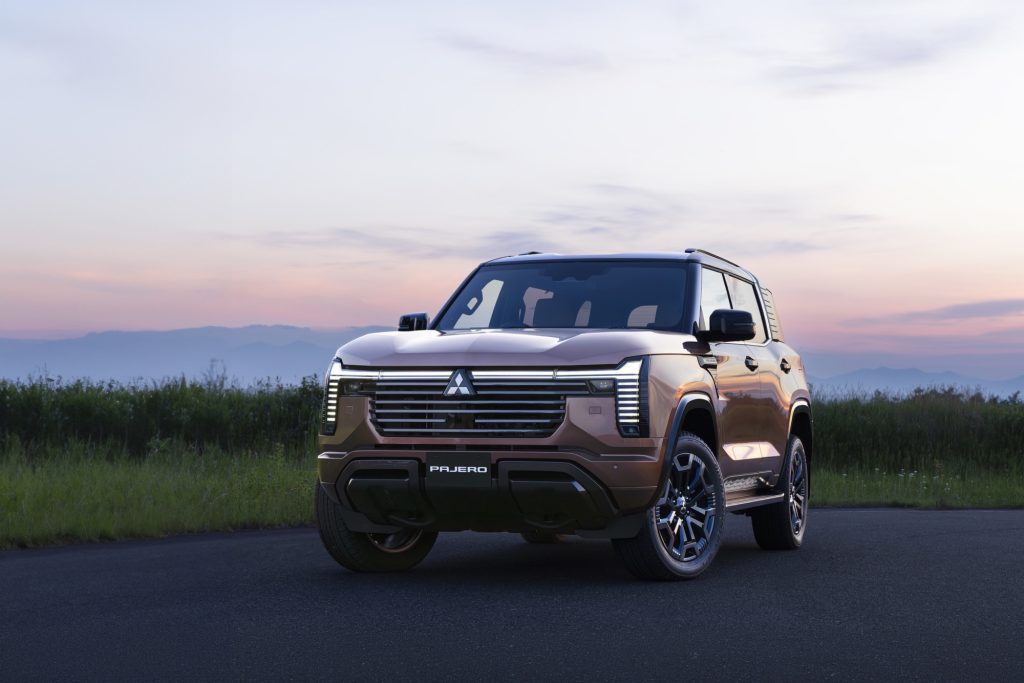
For a generation of Ghanaian motorists, the Mitsubishi Pajero needs very little introduction.
Long before luxury SUVs became symbols of status on Accra’s roads, the Pajero had already established itself as one of the vehicles to have. Through the 1980s and into the mid-1990s, it occupied a very special place in Ghana’s automotive landscape. Senior government officials used them, the country’s leadership was associated with them, and owning one immediately suggested that you had arrived.
More importantly, the Pajero earned its reputation.
It was rugged enough for Ghana’s less-than-perfect roads, capable when the tarmac ended and comfortable enough to carry important people over long distances. Several decades later, many old Pajeros are still working, which tells you something about the basic engineering behind the name.

But the world moved on.
Toyota’s Land Cruiser became the dominant big 4×4 in this part of the world. Nissan’s Patrol grew bigger, more luxurious and increasingly desirable. The Pajero, meanwhile, continued fighting with an ageing platform until Mitsubishi eventually ended production of the fourth-generation model.
And yet, considering just how old that architecture had become, the Pajero continued to perform surprisingly well.
Now Mitsubishi wants back in.
On September 2, 2026, the company unveiled an entirely new Pajero, and judging by the specifications announced so far, Mitsubishi has not simply brought back an old name. It appears to have spent considerable effort building a proper flagship 4×4 again.
Back to Being a Proper Pajero
Perhaps the most reassuring part of Mitsubishi’s announcement is what it has not done.
The new Pajero has not suddenly become a soft crossover wearing a legendary badge.
Underneath it remains a proper ladder-frame SUV.
That immediately tells us something about Mitsubishi’s priorities. A ladder-frame construction generally gives a serious off-roader the structural toughness required for sustained use on poor roads, rough terrain and demanding working conditions.
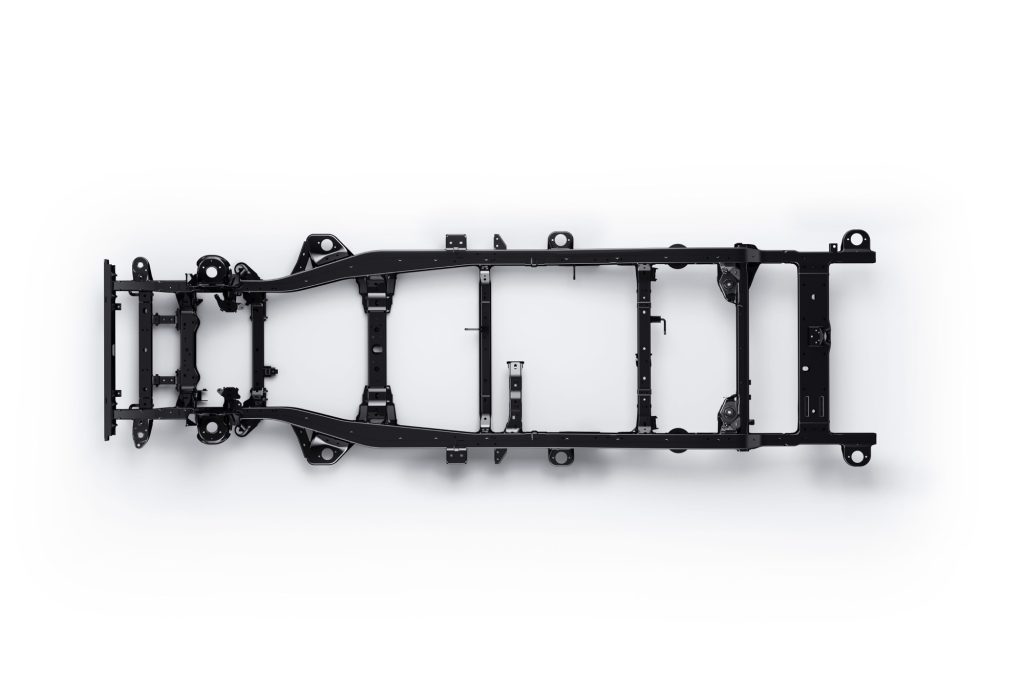
For countries such as Ghana, that matters.
The new Pajero measures 4,920 mm long, 1,925 mm wide and 1,910 mm high, sitting on a 2,870 mm wheelbase. Ground clearance is a healthy 230 mm.
Its off-road geometry is equally encouraging: a 30.4-degree approach angle, 22.6-degree breakover angle and 25.8-degree departure angle.
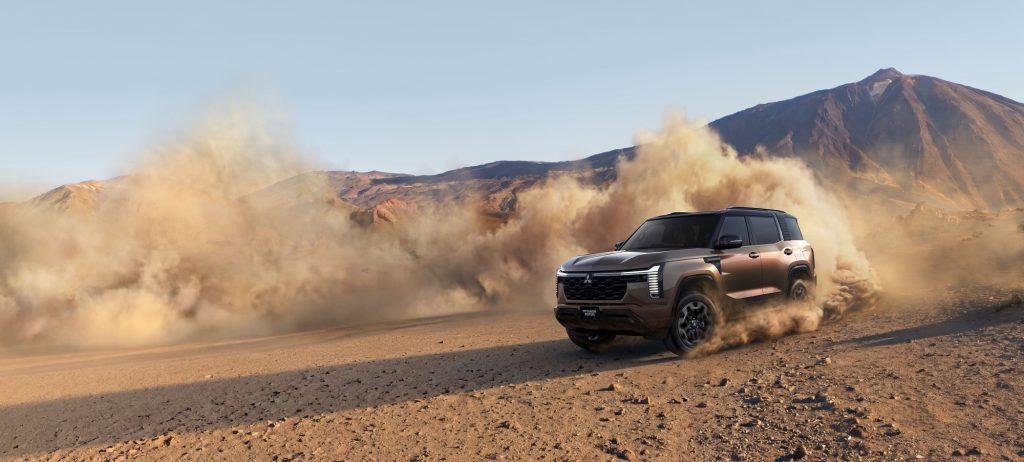
In simple English: Mitsubishi expects this thing to leave the pavement.
And not just for photographs.
The Interesting Bit: Super Select Is Still Here
Long-time Mitsubishi enthusiasts will be pleased to see the return of Super Select 4WD-II.
It remains one of the Pajero’s most important technical advantages.
The driver gets four drivetrain configurations:
2H for normal rear-wheel-drive operation.
4H for full-time four-wheel drive.
4HLc for four-wheel drive with the centre differential locked.
And 4LLc, which combines the locked centre differential with low-range gearing for the serious stuff.
That flexibility is important because the Pajero doesn’t force you to choose between being a comfortable road vehicle and a genuine four-wheel drive.
Mitsubishi has now added its Super-All Wheel Control — S-AWC — system to the Pajero as well.
S-AWC coordinates acceleration, braking and cornering behaviour and works alongside Active Yaw Control, stability and traction control and ABS to manage the forces going through the four wheels.
Seven drive modes are available: Normal, Eco, Gravel, Snow, Mud, Sand and Rock.
Snow may not get too much exercise in Accra, but Mud, Sand and Gravel certainly won’t be short of work in our part of the world.
A Diesel Engine, Sensible.
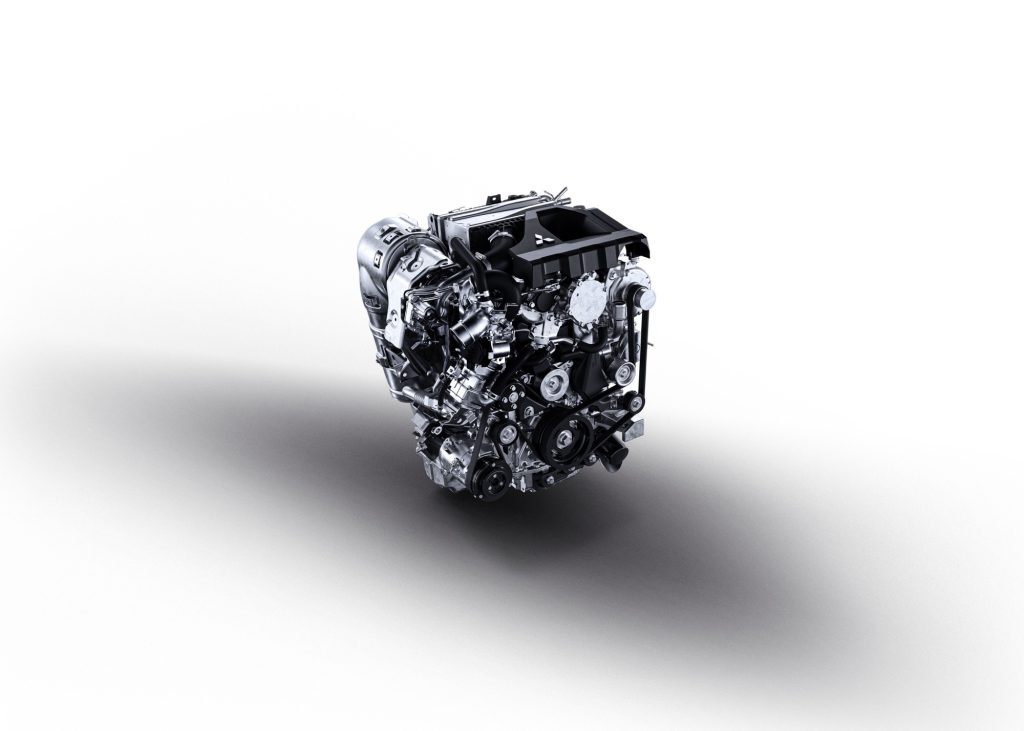
Under the bonnet is something else many buyers in markets like ours will appreciate: a diesel engine.
Mitsubishi has developed a 2.4-litre clean-diesel engine using a variable-geometry turbocharger, producing up to 480 Nm of torque.
It is connected to a newly developed eight-speed automatic transmission with a Sport mode.
Instead of massive horsepower figures, the company appears to have concentrated on where it matters most, usable torque, control and efficiency.
For a vehicle designed to cover long distances, climb difficult terrain and potentially operate in parts of the world where fuel quality, servicing infrastructure and road conditions can be challenging, that could prove to be a very sensible decision.
The real test, of course, will be how durable this new powertrain proves after several years of hard use.
Ghanaian drivers are very good at conducting long-term durability tests manufacturers never knew they signed up for.
Independent Front, Solid Rear
The suspension setup also tells an interesting story.
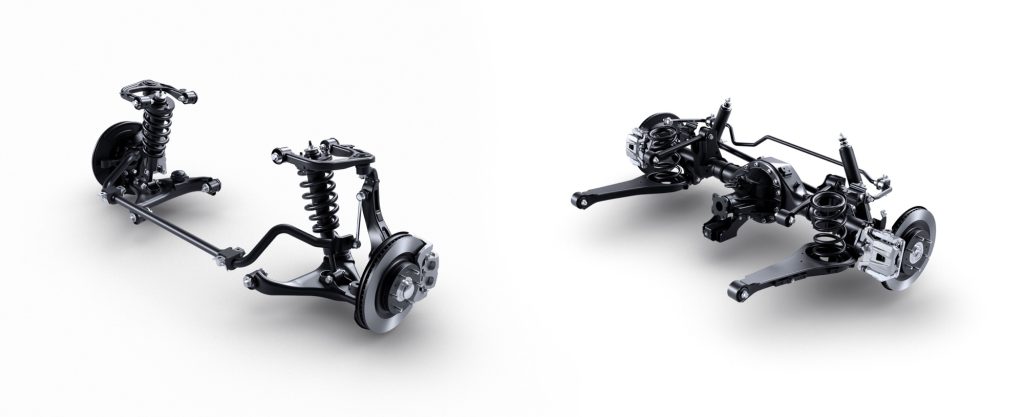
Mitsubishi has gone with independent double wishbones at the front and a newly developed five-link rigid axle at the rear.
This strikes a middle ground between serious off-road capability and respectable on-road behaviour.
Mitsubishi calls one of the development targets “off-road comfort.”
That is actually an important phrase.
Making an SUV capable of travelling over a bad road is one thing. Making it travel over that same bad road without shaking seven passengers into a completely new arrangement is another.
Strengthened body mounts, increased frame rigidity and suspension tuning aimed at keeping the tyres in contact with uneven surfaces are supposed to improve both handling and ride comfort.
We will reserve judgement until we drive it, but the engineering direction makes sense.
Mitsubishi Has Rediscovered Luxury Too
The biggest transformation, however, may be inside.
Remember that this vehicle is supposed to be Mitsubishi’s new global flagship.
The company describes the new Pajero around three ideas: Confidence, Comfort and Prestige.
That final word is important.
Land Cruiser and Patrol buyers today expect much more than four-wheel-drive ability. These vehicles have become luxury products, executive transport and family vehicles as much as tools for crossing difficult terrain.
Mitsubishi clearly understands that.
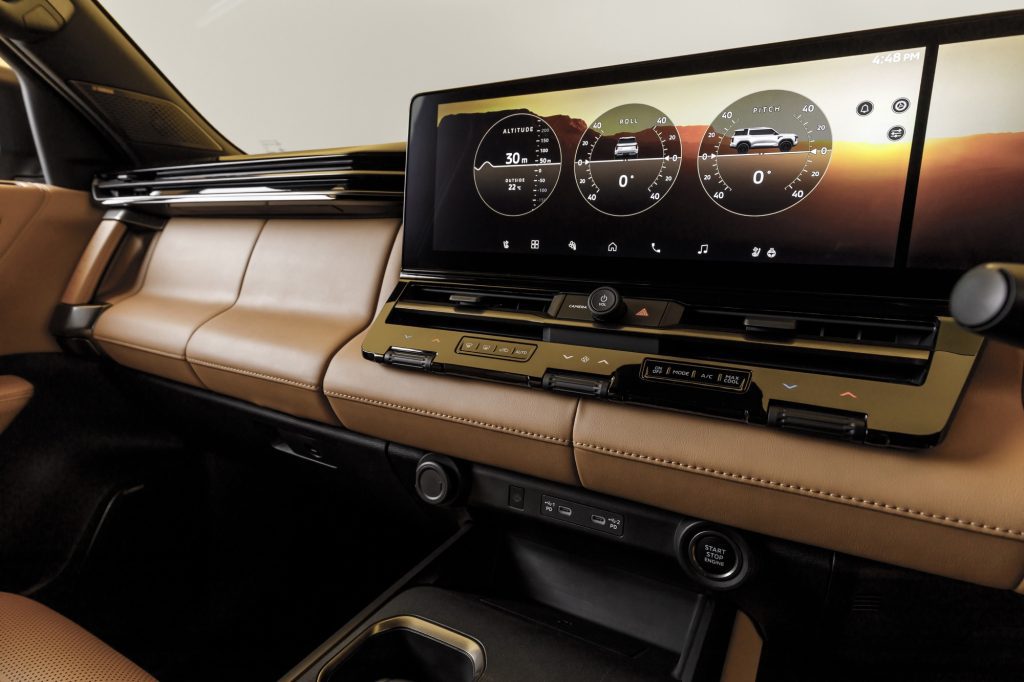
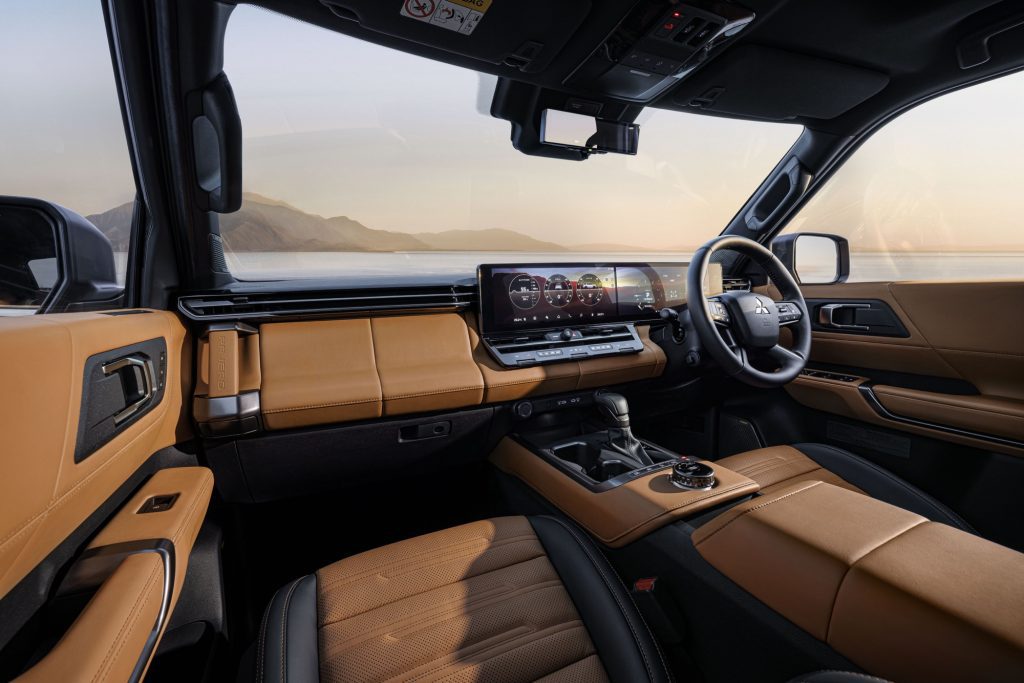
The dashboard incorporates two large 14.3-inch displays into a single horizontal arrangement on some specifications.
Better still, Mitsubishi hasn’t forgotten where the Pajero came from.
The famous supplementary gauges of older Pajeros have effectively gone digital. A new Multi-Meter can display altitude, compass direction, temperature, vehicle pitch and roll angles and Active Yaw Control information.
Old-school Pajero fans should appreciate that little detail.
There are even 16 selectable display backgrounds that change with the time of day.
Necessary? Probably not.
Fun? Absolutely.
Seven Proper Seats
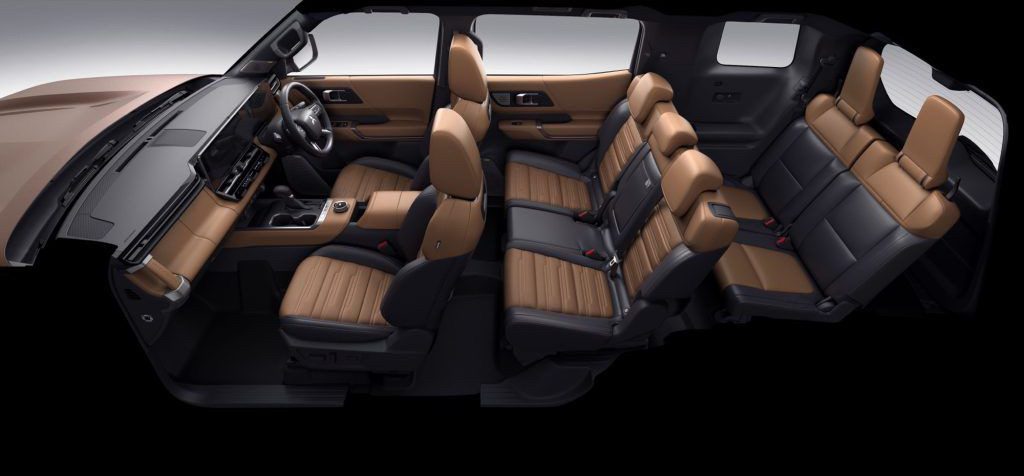
The new Pajero remains a seven-seater.
Mitsubishi says the second-row seats can slide through 150 mm and tumble forward to improve access to the third row.
Importantly, the company claims the third row has enough headroom for adults and provides additional foot space beneath the second-row seats.
That could become a major selling point because many so-called seven-seat SUVs really provide five seats plus two punishment chairs.
There is also three-zone climate control and seat ventilation.
In Ghana?
Yes please.
Quietness Has Become Part of the Pajero Mission
Another interesting area Mitsubishi has concentrated on is refinement.
Acoustic glass is used not only for the windscreen but also for the front and rear door windows, while additional sound insulation has been incorporated throughout the vehicle.
That should reduce engine, wind and road noise.
Again, this demonstrates where Mitsubishi wants to position this vehicle.
This isn’t merely supposed to be a rugged 4×4.
It is supposed to be Mitsubishi’s answer to premium full-size SUVs.
Cameras Can Even See Under the Car
The 3D Multi Around Monitor uses four exterior cameras to construct a surround view of the vehicle.
More interesting for off-road driving is the front under-floor view.
It allows the driver to see terrain immediately underneath and ahead of the Pajero, areas normally hidden by the bonnet.
Select 4HLc or 4LLc and the system can automatically display the terrain.
Imagine approaching a nasty rock, deep rut or awkward section of an unpaved road and being able to see almost exactly where your front wheels are going.
That is technology being used for something genuinely useful.
It Has Become a Much Safer Pajero Too
There is a substantial suite of driver-assistance technology.
Depending on specification, Mitsubishi lists Forward Collision Mitigation with pedestrian, cyclist and motorcycle detection, Predictive Forward Collision Warning, Emergency Lane Assist and Front Cross Traffic Alert.
MI-PILOT combines adaptive cruise control with lane-keeping assistance for highway driving.
Eight airbags are fitted, including Mitsubishi’s first centre airbag between the front occupants.
There is also Mitsubishi Connect, allowing owners to remotely check certain vehicle functions and operate the climate control from a smartphone in supported markets.
Again, exact equipment will depend on country and specification.
And Yamaha Handles the Music
One specification we weren’t expecting to spend much time discussing on a Pajero is the stereo.
But here we are.
Mitsubishi has worked with Yamaha Corporation on a 12-speaker, dual-amplifier Dynamic Sound Yamaha Ultimate audio system.
It even uses noise compensation to adjust the audio according to vehicle speed and road noise.
So theoretically you can be crawling through a muddy trail while enjoying a very respectable concert.
Progress.
The Design Looks Back Before Moving Forward
Mitsubishi describes the design philosophy as “Grand Charisma.”
There are several deliberate references to earlier Pajeros.
The upright stance and strong horizontal lines draw inspiration from the original model. The C-pillar references the first generation’s roll-bar design.
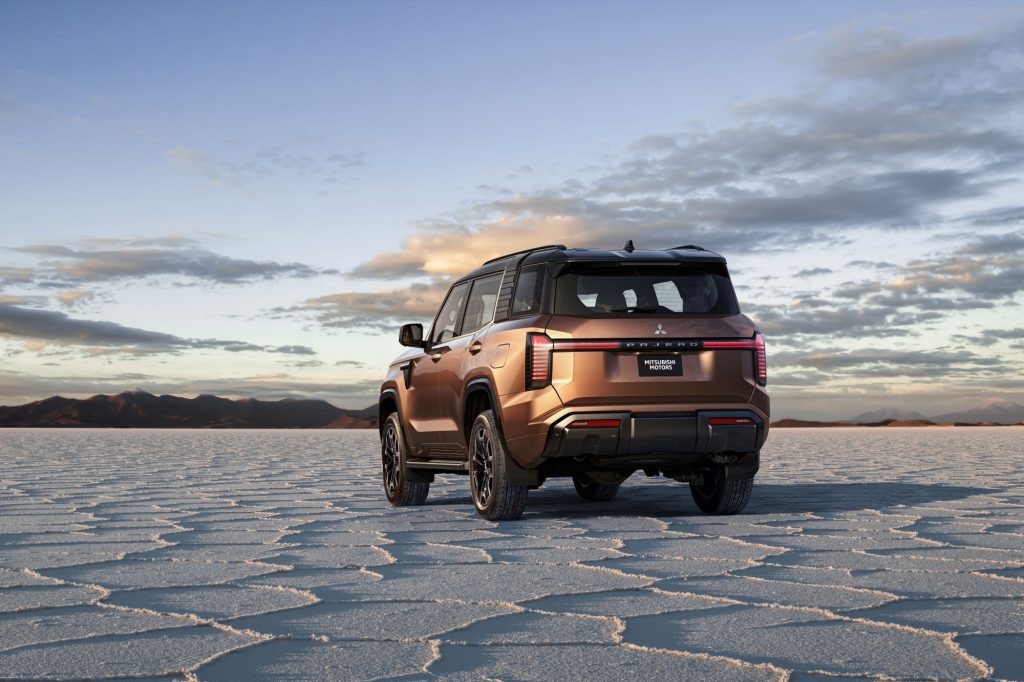
Up front are distinctive T-shaped lamps and two available grille designs.
Even the design philosophy behind the nose gets unusually Japanese: Mitsubishi says its appearance is inspired by the controlled strength and composure associated with kendo.
Visually, Mitsubishi clearly wants this vehicle to look like a Pajero rather than another anonymous large SUV.
Can It Take the Fight Back to Land Cruiser and Patrol?
That is the real question.
The Pajero isn’t returning to the same market it dominated decades ago.
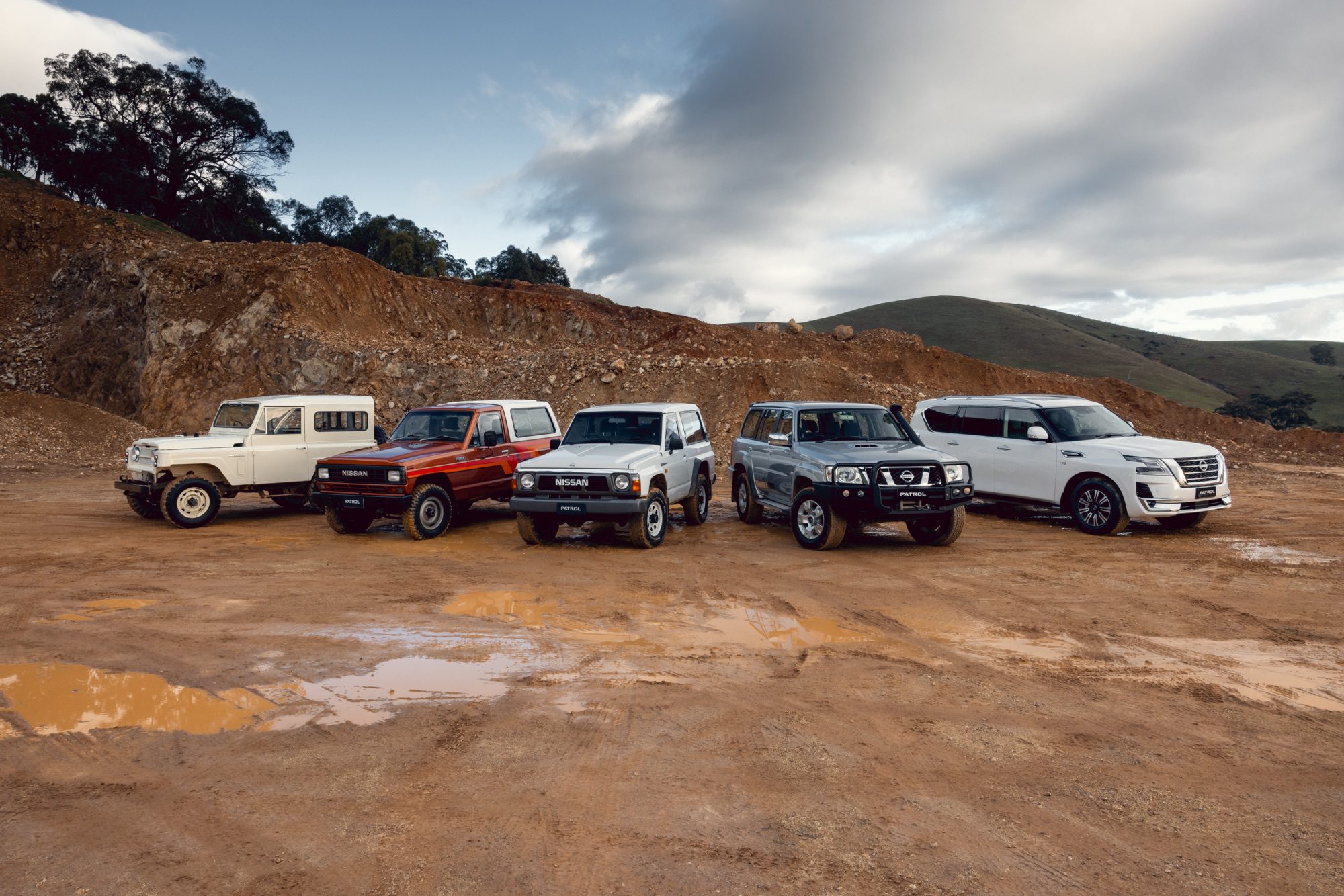
Toyota has had years to cement the Land Cruiser’s almost legendary reputation across Africa and the Middle East. Nissan has pushed the Patrol heavily into the luxury end of the market, particularly in the Gulf.
Mitsubishi therefore has some catching up to do.
Dealer support, parts availability, long-term durability and, critically, pricing will matter just as much as clever technology.
And there is another important unknown for us: Ghana has not yet been confirmed among the initial launch markets.
The new Pajero will first go on sale in Thailand, followed by Japan and Australia during Mitsubishi’s 2026 fiscal year. From fiscal 2027, Mitsubishi says distribution will expand to approximately 100 countries across regions including ASEAN, Latin America and the Middle East.
We will therefore be watching closely for African-market announcements.
Because if Mitsubishi gets the pricing, specification and support right, there is no reason this vehicle should simply accept third place.
The hardware certainly suggests ambition.
A ladder chassis. Proper low-range four-wheel drive. 480 Nm diesel. Seven seats. 230 mm of ground clearance. Serious off-road geometry. S-AWC. Modern safety technology. A considerably more luxurious interior.
This sounds less like Mitsubishi dusting off a famous name and more like Mitsubishi remembering exactly what made the Pajero famous in the first place.
For Ghana, that makes the comeback particularly interesting.
There was a period in our automotive history when arriving in a Pajero meant something.
Nearly four decades later, Mitsubishi would clearly like it to mean something again.
Welcome back, Pajero. Now let’s see if you can take your old parking spot back from the Land Cruiser and Patrol.



Leave a Reply