
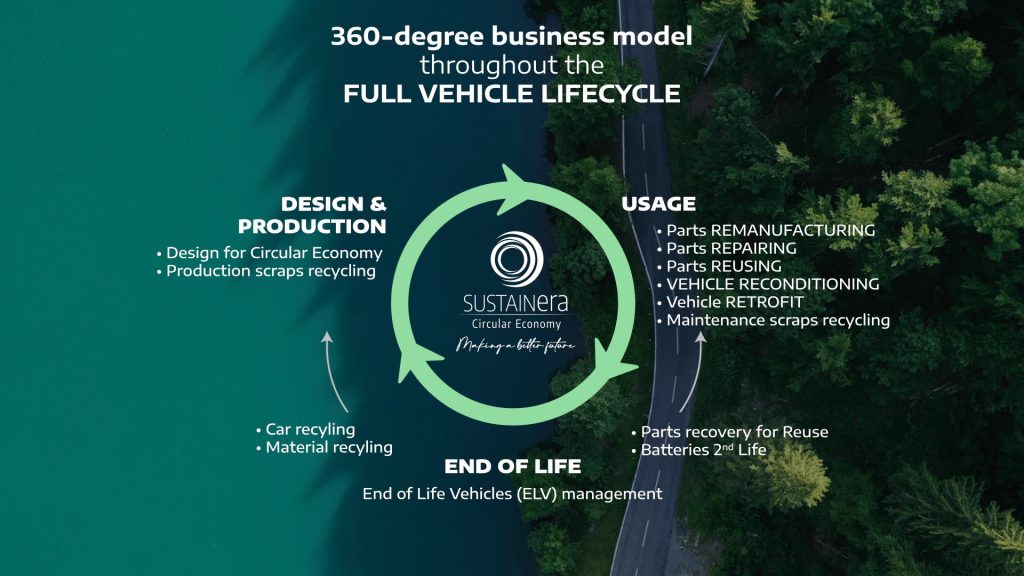
The auto industry has spent years talking about sustainability in the polished language of carbon targets, EV rollouts and cleaner factories. But one of the less glamorous and potentially more consequential battlegrounds may be what happens after a vehicle’s useful life is over.
That is where Stellantis is now placing a serious bet.
During a recent Stellantis Middle East and Africa Circular Economy Virtual Roundtable, the company laid out a plan that feels like a blueprint for how major automakers could rethink the business of aging vehicles, used parts and waste recovery. The headline move is the launch of Stellantis’ first vehicle dismantling center in the Middle East and Africa, located in Casablanca, Morocco.
On paper, it is Stellantis’ third dismantling center globally, after Turin in Italy and São Paulo in Brazil. In practice, it looks like something larger. The Casablanca site is being positioned as a regional anchor for a more structured end of life vehicle ecosystem across MEA, with Morocco serving as the launch pad and Sub Saharan Africa, especially West Africa, very much in view.
That matters because for decades, large parts of Africa’s automotive reality have been defined by long vehicle life cycles, informal repair economies, used imports and inconsistent parts supply. In that environment, “circular economy” can sound like corporate jargon until you strip it down to what it really means: keeping vehicles and parts in use longer, recovering value from what would otherwise be waste, and creating a cleaner, more traceable supply chain for replacement parts.
Mobility, after all, is not just about movement. In growing economies, it is often a bridge to opportunity. It connects people to jobs, markets, schools, healthcare and entire supply chains of commerce. When vehicles become too expensive to maintain or too unreliable to keep on the road, that burden falls hardest on ordinary consumers, small businesses and transport operators. A healthier parts ecosystem does more than support cars. It helps support livelihoods and, in a very real sense, can narrow economic divides by making mobility more accessible and sustainable.
That also helps explain why parts availability matters so much in this region. One of the quieter reasons some vehicle brands lose relevance in African markets is not necessarily that the products were bad to begin with, but that owners eventually struggle to find genuine replacement parts easily and affordably. Once that happens, confidence drops, maintenance suffers, resale value weakens and the brand begins to fade from the road. In many markets, an automaker is only as strong as its aftersales ecosystem.
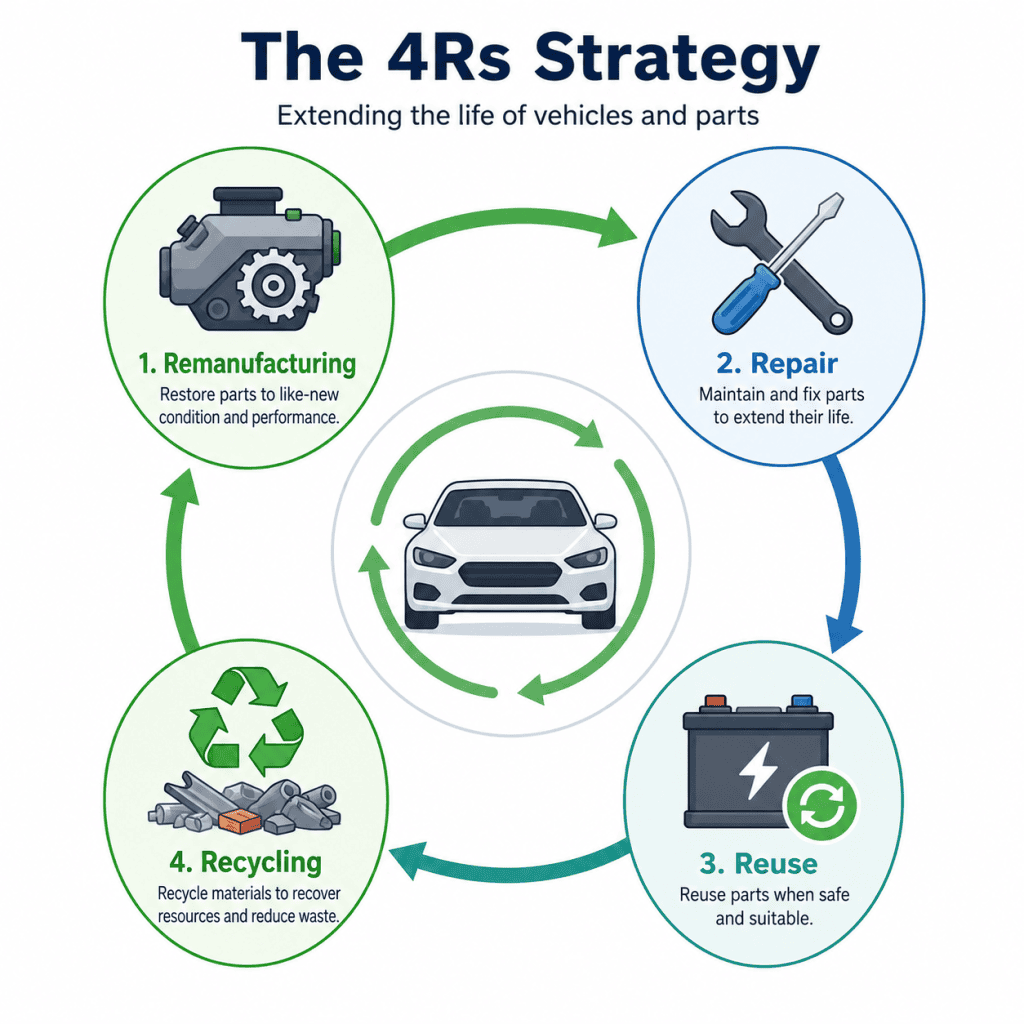
That is what Stellantis says it is trying to do through SUSTAINera, its dedicated circular economy business unit. The strategy is built around the familiar four Rs: remanufacturing, repair, reuse and recycling. In MEA, the company says it is applying that logic across the full lifecycle of vehicles and parts through remanufactured parts sales, used original parts distribution via the B-Parts platform, recycling partnerships and end of life vehicle processing.
The Casablanca facility is where that strategy becomes physical.
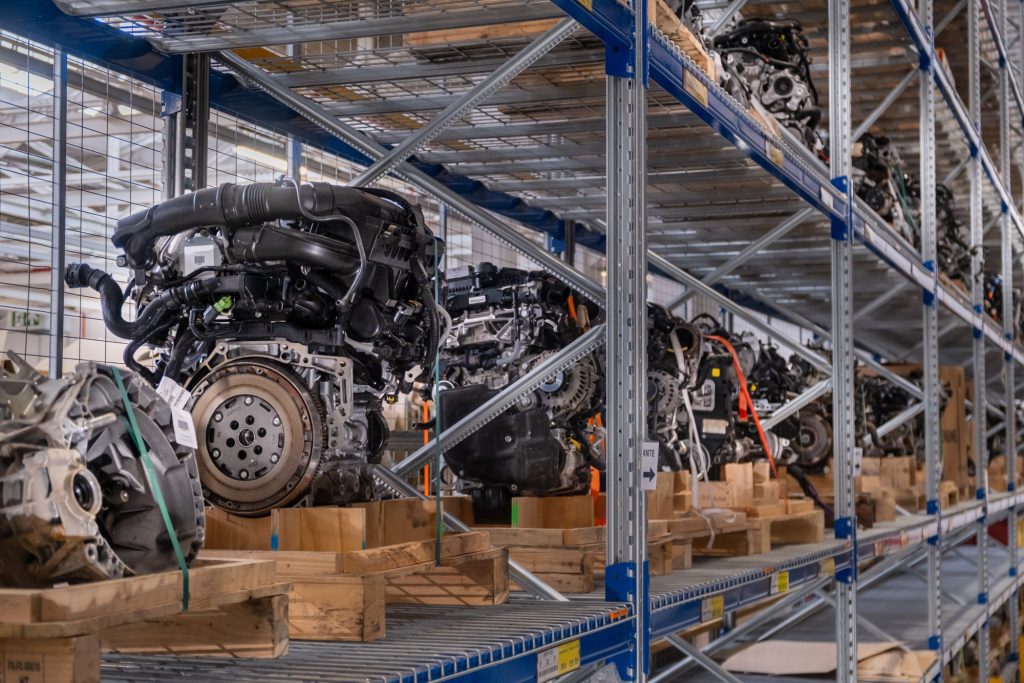
Rather than simply collecting scrapped vehicles, the site is designed to industrialize the dismantling process. Vehicles sourced from insurers, auctions and end of life channels are brought in, broken down systematically, and stripped for reusable original parts and recyclable materials. The goal is not just environmental housekeeping. It is to build a business around affordability, recovery and control.
That last point is worth emphasizing. Circular economy is often sold as an environmental virtue. Stellantis is selling it as an operating business model.
The company says the MEA rollout should deliver more affordable parts and services, better resource efficiency and a more traceable aftermarket ecosystem aligned with compliance requirements and Stellantis standards. For consumers and independent repairers, that could mean better access to functional original parts at lower cost. For Stellantis, it means another way to capture value from vehicles long after the first sale.
That is a smart play, especially in markets where new vehicle affordability remains a challenge and where the aftermarket often determines whether a vehicle survives economically. If an automaker can create an official pipeline for reusable parts, including high value components such as traction batteries, it is not just tidying up the industry. It is inserting itself more deeply into the ownership lifecycle.
The numbers suggest Stellantis is treating this as more than a symbolic exercise. The company says it is investing €1.6 million in the Casablanca site, which spans 6,000 square metres and is expected to dismantle up to 10,000 vehicles a year. At full capacity, it should support around 150 direct and indirect jobs.
None of this, on its own, will transform the African automotive industry overnight. Informal networks are still deeply entrenched, regulation around end of life vehicles remains uneven across markets, and consumer trust in used parts depends heavily on quality control and transparency. But that is precisely why this move is interesting. Stellantis appears to understand that if circular economy is going to work in this region, it has to be industrial, commercially viable and scalable. Not just noble.
And that may be the bigger takeaway.
For all the hype around electrification and software defined vehicles, the next important chapter in the industry may also involve something far less glamorous: dismantling old cars properly, recovering what still works, and turning automotive waste into margin.
It is not the sexiest story in the car business. But it may end up being one of the smartest.



Leave a Reply