
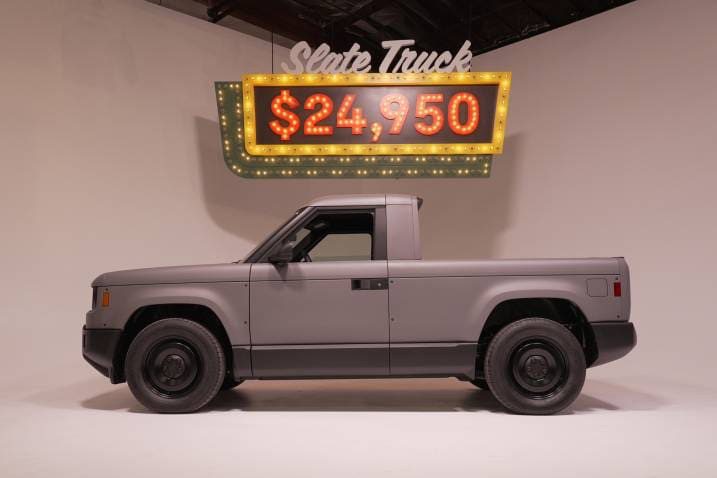
When the Slate truck was unveiled, many people applauded what looked like a return to simple, honest motoring. A no-frills electric pickup with a starting price hovering around US$25,000 sounded like exactly what the automotive industry needed.
But the more I looked at it, the more one question kept coming back to me:
Have we become so accustomed to expensive vehicles that we’ve stopped questioning what value really looks like?
At first glance, the Slate appears to be a bargain. Look closer, however, and the equation starts to change.
This is an intentionally stripped-down truck. Minimal interior, manual features, modest performance, and an accessory catalogue that encourages buyers to pay extra for equipment many manufacturers include as standard. Suddenly, that “affordable” price doesn’t feel quite so affordable.
To be clear, I understand that research and development is expensive. Building an entirely new vehicle platform is no small feat, especially for a startup. But Slate isn’t the only company investing billions into R&D. Every established manufacturer, from Ford and Hyundai to Toyota and Chevrolet, absorbs enormous engineering costs while producing vehicles that often deliver significantly more capability at similar prices.
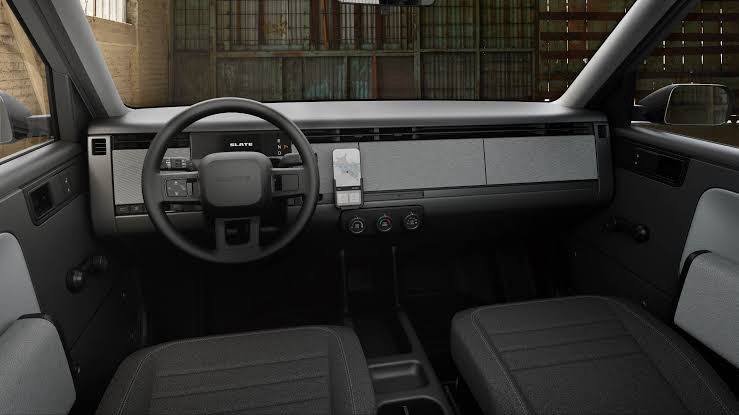
In fact, that’s where I struggle with the Slate.
Ironically, the company has introduced some genuinely fresh thinking. Its modular design philosophy, simplified manufacturing approach and repair-friendly construction challenge decades of conventional automotive thinking. Those are innovations worth applauding.
Yet shouldn’t innovations like these make the vehicle cheaper rather than simply different?
One would expect simplified manufacturing, fewer components and a minimalist design to translate into dramatic cost savings for the customer. Instead, buyers are still paying roughly the same money that can purchase vehicles offering considerably more.
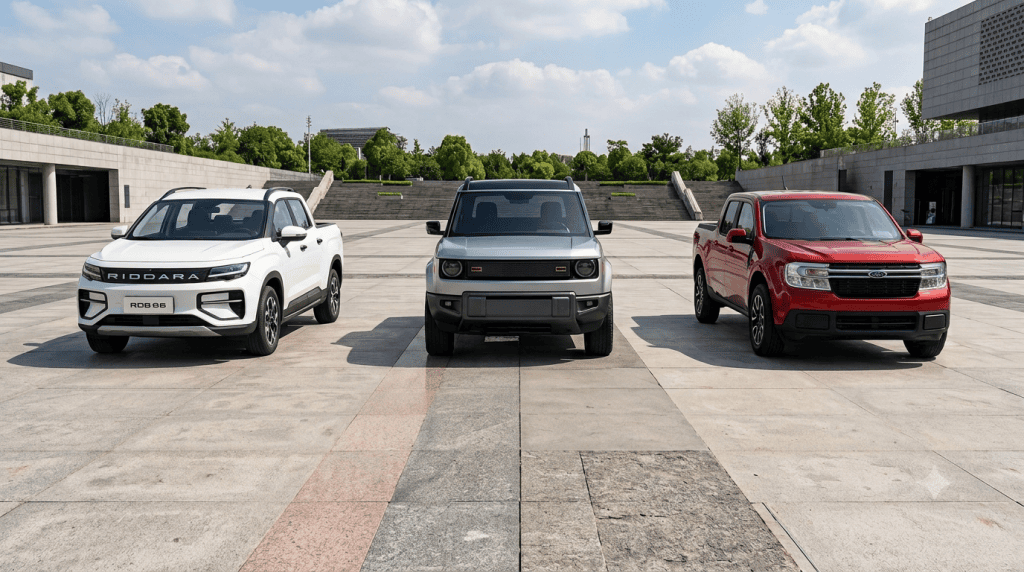
If I’m buying a purpose-built electric truck in this price range, I’d expect more than just clever packaging.
I’d expect technology that genuinely pushes the industry forward.
I’d want competitive driving range.
I’d want all-wheel drive, especially in a vehicle marketed as a truck.
I’d expect advanced traction and stability systems such as torque vectoring.
I’d expect rapid DC charging that makes long-distance travel practical.
These aren’t futuristic wish-list items. Many electric vehicles already offer combinations of these technologies, and some can be found at similar, or even lower, prices.
That leads me to wonder whether Slate has focused its innovation in the right place.
The company has undoubtedly reimagined how a vehicle can be packaged, configured and marketed. But imagine if that same engineering effort had instead been directed toward battery chemistry, lower-cost battery production, ultra-efficient electric drivetrains or breakthrough charging technology.
Those are the kinds of innovations that could genuinely reshape the market.
History shows us that the companies remembered for changing the automotive industry weren’t simply those that built different cars, they built better technology that eventually became accessible to everyone.
Henry Ford transformed manufacturing.
Toyota transformed production quality.
Tesla accelerated EV adoption by proving electric cars could outperform expectations.
The next revolution is unlikely to come from replacing touchscreens and manual window winders. It will come from making batteries cheaper, charging dramatically faster, extending driving range and reducing ownership costs.
That’s where the real opportunity lies.
The Slate truck is an interesting concept, and I genuinely appreciate the fresh ideas behind it. But for me, the product feels like an example of innovation being concentrated on presentation and philosophy rather than on the technologies that will define the next generation of electric vehicles.
Perhaps that’s enough for some buyers.
For me, however, a US$25,000 electric truck should leave me thinking, “I can’t believe they built all this for that price.”
Instead, the Slate leaves me asking, “Is this really all US$25,000 buys today?”
And perhaps that’s the bigger conversation.
Have vehicles become so expensive that we’ve lowered our expectations of what value should actually look like?



Leave a Reply