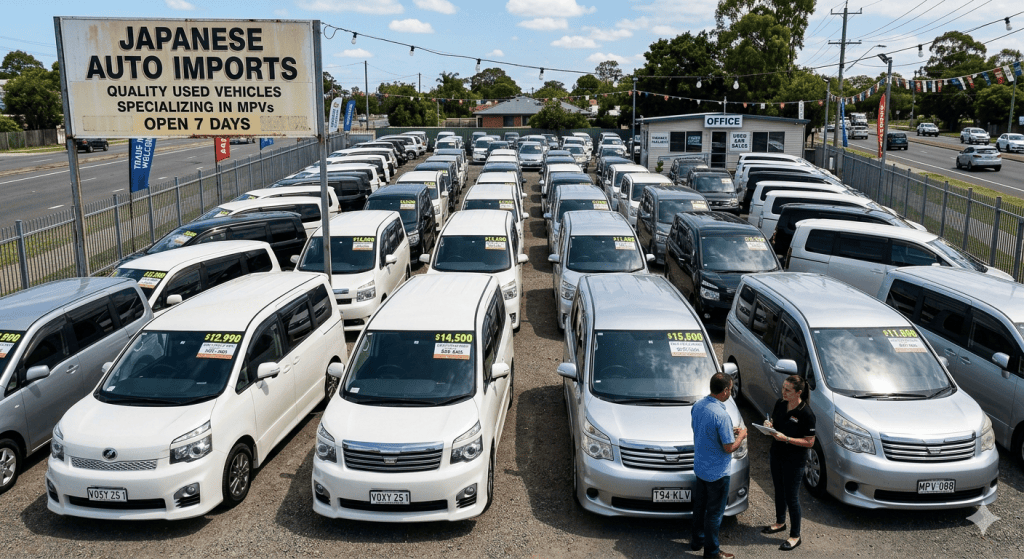
The conversation around the Toyota Voxy in Ghana has officially moved from debate to action.
What started as social media chatter and roadside observations is now being addressed at the highest level, with clear, and firm language from the National Road Safety Authority.
At a recent press engagement, Executive Director Abraham Amaliba laid out what can only be described as a four-point crackdown plan.
And this time, there was no ambiguity.
The Four Directives
Amaliba’s message was direct and structured:
“One, stop the importation of Voxy Toyota vehicles.
Two, stop the conversion of right-hand drive vehicles to left-hand drive.
Three, close down garages that do the conversion because they are engaged in an illegality.
And then four, educate the traveling public… of the dangers…”
This is the strongest position yet from the NRSA on the issue.
And it signals a shift from observation to enforcement.
Not a Ban… Yet
Despite the strong tone, the NRSA is stopping short of an outright ban, for now.
“As to whether we would ban them or not, we are not there yet.”
But that statement comes with an important qualifier.
According to Amaliba, the Voxy is only suited for intra-city use, not the long-distance, high-pressure commercial operations it is currently being used for across Ghana.
That distinction matters.
Because in reality, many of these vehicles are:
– Running intercity routes
– Carrying full passenger loads over long distances
– Operating under intense commercial pressure
In other words, they are being used far beyond what the NRSA considers appropriate.
The Conversion Problem Takes Centre Stage
If there is one issue the NRSA is zeroing in on, it is this:
RHD to LHD conversions.
The Authority is not just questioning the safety of these conversions, it is calling them illegal in practice when not done to approved standards.
And more critically:
Garages carrying out these conversions could be shut down.
That is a major escalation.
Because it targets the supply chain, not just the vehicles on the road.
From Affordable Opportunity to Regulatory Risk
The rise of the Voxy in Ghana has been driven by simple economics.
– Low purchase cost
– High passenger capacity
– Quick return on investment
It has become a go-to vehicle for many entering the transport business.
But what the NRSA is now saying is clear:
Affordability cannot come at the expense of safety and legality.
A System Under Review
This is no longer just about one vehicle model.
The NRSA’s position raises broader questions about:
– Import controls
– Vehicle modification standards
– Enforcement at the ports
– Roadworthiness certification Public awareness
And importantly, the role of agencies like the Ghana Revenue Authority Customs Division and the Driver and Vehicle Licensing Authority in tightening compliance.
What Happens Next?
The NRSA has indicated it will engage stakeholders and implement technical committee recommendations within two weeks.
That could translate into:
– Stricter port inspections
– Crackdowns on illegal conversion garages
– More rigorous DVLA checks
– Public education campaigns targeting drivers and passengers
And possibly, down the line, further restrictions on usage.
Ryde’s Take
This is a turning point.
For months, the Voxy conversation has been driven by opinion:
“It’s the driver, not the car.”
But the NRSA is reframing the issue.
It is no longer just about driver behaviour.
It is about vehicle suitability, engineering integrity, and regulatory gaps.
And now, accountability.
The Real Question
The Voxy didn’t create this situation alone.
It exposed something bigger:
– A demand for affordable transport
– A system that allows grey imports to thrive
– And a gap between regulation and reality
So the question now is not just about the Voxy.
It is this:
Can Ghana balance affordability, opportunity, and safety, or will one always come at the expense of the others?
Let’s talk…



Leave a Reply