
Martina Biene is leaving Volkswagen Group Africa to take up a new role on the Board of Management of Škoda Auto, bringing to an end a tenure during which she became one of the more vocal advocates for building a stronger African automotive industry. For Ghana, her departure is particularly significant.
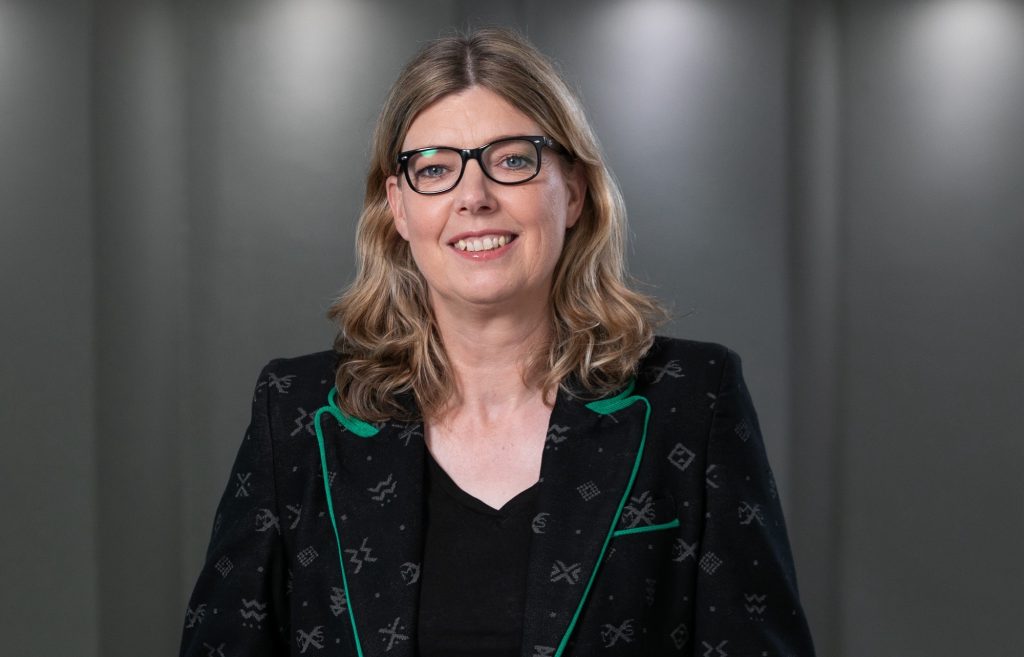
Effective October 1, 2026, Biene will become Škoda Auto’s Board Member responsible for Sales and Marketing, succeeding Martin Jahn, who is moving to the Volkswagen brand in Wolfsburg.
It is a significant move within the Volkswagen Group and, viewed from Africa, probably a deserved one.
Biene became the first woman to serve as Chairperson and Managing Director of Volkswagen Group Africa when she took up the position in November 2022. It was actually her second stint with the company’s African operations. Between 2018 and 2020 she had headed the Volkswagen Passenger Brand in South Africa, a period in which Volkswagen achieved a record 20.4% market share in 2019.
Her latest tenure, however, was about much more than market share.
For those of us following Africa’s automotive industry, Biene increasingly became one of the executives willing to make the argument that Africa should not simply remain a destination for vehicles manufactured elsewhere. It should manufacture, assemble and ultimately develop more of the vehicles Africans drive.
And Ghana became an important part of that argument.
Ghana was more than another market
Ryde Channel has had several opportunities to interview Martina Biene over the years.
One thing was always difficult to miss: her enthusiasm when the conversation turned to Africa.
Beyond selling more Volkswagens, there appeared to be a genuine interest in finding ways to take mobility to more people and to make Volkswagen feel like an African brand again, not simply a European manufacturer selling European products on the continent.
That distinction matters.
Africa is one of the world’s last major automotive growth frontiers, but it is also a difficult market. New-car penetration remains low in many countries, financing is limited, used-car imports dominate and individual markets often lack the volumes required to support large-scale manufacturing.
Biene seemed to understand that solving those problems required more than opening dealerships.
In Ghana, Volkswagen’s journey began before her appointment as head of Volkswagen Group Africa. The company signed an agreement with the government in 2018 and began local assembly in 2020.
What happened during Biene’s tenure was the next important stage.
In March 2023, Volkswagen opened its own 5,000-square-metre assembly facility near the Port of Tema and assumed direct responsibility for vehicle assembly from Universal Motors Limited. The facility was established with capacity for about 5,000 vehicles annually and initially covered models including the T-Cross, Tiguan, Amarok and Virtus.
Biene used the occasion to make Volkswagen’s ambitions quite clear.
Ghana, she said, was important to Volkswagen’s Sub-Saharan African growth plans, particularly in West Africa. More interestingly, she spoke about creating a collaborative West African automotive industry hub, where countries could participate in different parts of the automotive value chain and use AfCFTA to trade vehicles and components across borders.
That is a considerably bigger vision than assembling a few thousand cars in Tema.
The bigger battle was making locally assembled cars viable
One area where Biene deserves recognition is her willingness to discuss an uncomfortable reality about Ghana’s automotive development programme.
Building assembly plants is only half the job.
Someone has to buy the cars.
At the Ghana launch of the locally assembled Volkswagen Virtus in 2024, Biene challenged government to fully implement the Ghana Automotive Development Policy and argued that Ghana had the potential to become an automotive manufacturing hub for West Africa.
Her concern was simple: Ghana’s new-car market remained too small.
About 6,000 new vehicles were sold in Ghana in 2023, according to figures she cited at the time. For a country with Ghana’s population, economy and regional ambitions, Biene argued that this was nowhere close to its potential and believed volumes could multiply significantly if the remaining elements of the automotive policy were implemented.
Whether one agrees with every policy prescription promoted by the automotive industry is another discussion. But on the fundamental economics, the argument is difficult to dispute.
You cannot develop a sustainable local vehicle-assembly industry if the factories do not have customers.
That meant Volkswagen also had to look beyond production.
Mobility had to become more accessible
This is where something we repeatedly picked up in conversations with Biene becomes important: mobility for the masses.
Africa does not necessarily have a shortage of people who want new cars. It has a shortage of people who can realistically finance them.
A locally assembled vehicle costing hundreds of thousands of cedis remains inaccessible if the customer is expected to arrive at the dealership with the entire purchase price.
During Biene’s tenure, Volkswagen Ghana increasingly pursued financing partnerships as part of its growth strategy. A collaboration with GCB Bank, for example, gave eligible customers access to financing for new Volkswagen vehicles, with the bank announcing financing of up to 100% under the arrangement. Biene personally participated in discussions surrounding that partnership.
That may ultimately prove more important to Ghana’s automotive industry than adding another model to an assembly line.
The future of new-car ownership in Ghana will depend heavily on structured financing, leasing, fleet programmes and other mechanisms that reduce the huge upfront cost of acquiring a vehicle.
Local assembly and vehicle financing therefore cannot be treated as separate conversations.
Biene appeared to understand that.
More Ghana-assembled Volkswagens followed
Volkswagen also continued expanding the range of vehicles assembled locally.
The Virtus joined the Ghana operation and, in 2025, Volkswagen took another interesting step by assembling its flagship Touareg SUV locally for the first time.
Biene was in Ghana around the launch and described the programme as part of Volkswagen’s continuing role in the country’s automotive development.
The significance wasn’t necessarily the number of Touaregs Ghana would produce.
It was what the vehicle represented.
Local assembly was beginning to stretch from more mainstream Volkswagen products into the premium end of the range. It helped reinforce the idea that “assembled in Ghana” should describe where a vehicle is put together rather than suggest a particular level of price, quality or sophistication.
That is important for the image of Ghana’s young automotive industry.
Her African footprint went well beyond Ghana
Of course, Biene’s job was much bigger than Volkswagen Ghana.
Under her leadership, Volkswagen’s Kariega manufacturing plant in South Africa achieved a record production volume of 167,084 vehicles in 2024.
Volkswagen also announced a R4-billion investment to add a third model to the plant. That vehicle, now officially named Tengo, has just been unveiled as Volkswagen celebrates 75 years in South Africa.
The Tengo is particularly relevant to Biene’s African strategy because it is intended to strengthen Volkswagen’s SUV offering in South Africa and other African markets.
She also served as President of the African Association of Automotive Manufacturers (AAAM) from October 2023 until July 2026, giving her another platform from which to advocate automotive industrialisation, regional integration and stronger African vehicle markets.
There is an obvious philosophy connecting these projects.
Build cars in Africa. Build vehicles suitable for African markets. Develop regional automotive hubs. Encourage governments to create workable industrial policies. Improve access to financing. And eventually create enough scale for Africa to become a far more important part of the global automotive industry.
Now Škoda comes calling
Biene’s next challenge takes her to the Czech Republic, where she joins the Board of Management of Škoda Auto as the member responsible for Sales and Marketing.
Škoda CEO Klaus Zellmer specifically pointed to her international experience and customer-focused approach as qualities that could help the brand continue expanding its global footprint.
It makes the move interesting from an African perspective too.
Executives who succeed in African automotive markets learn lessons that mature markets don’t always teach.
Here, affordability matters differently. Financing matters differently. Infrastructure varies dramatically. Customers frequently keep vehicles far longer. Used vehicles compete directly against new products. Markets are fragmented, and manufacturers must often work closely with governments simply to create the conditions necessary for an industry to develop.
Those experiences could prove valuable as Škoda pushes into more international markets.
Biene herself leaves Volkswagen Group Africa highlighting the resilience of the organisation and milestones including the early launch of the Tengo and the opportunities it creates for Plant Kariega and Volkswagen’s wider African SUV strategy.
And now the baton passes
Taking over Volkswagen Group Africa on October 1 will be Christiane Zorn, currently Vice President Region Overseas at Porsche AG, subject to the necessary regulatory and statutory processes.

Zorn brings around two decades of automotive experience, including previous roles at BMW and Audi in Europe and China, covering sales, product marketing and product strategy.
She therefore arrives with substantial international experience.
But she also inherits an unfinished African project.
For Ghana especially, the question will be whether Volkswagen’s commitment to local assembly, affordable mobility and the development of a wider West African automotive ecosystem continues with the same intensity.
Because perhaps Martina Biene’s most important contribution wasn’t one particular car, factory or investment.
It was consistently making the case that Africa should matter more to Volkswagen.
From our interactions with her at Ryde Channel, that belief never felt like a line pulled from a corporate presentation. There was a noticeable passion behind the discussion of making mobility accessible to more Africans and building a stronger Volkswagen presence on the continent.
The numbers will ultimately determine how successful that vision becomes.
But Ghana today has a Volkswagen-owned assembly operation, an expanding locally assembled model range, growing conversations around vehicle financing and a place within Volkswagen’s wider vision for a West African automotive hub.
Martina Biene cannot take sole credit for any of those achievements. Automotive industrialisation is always the work of governments, investors, employees, suppliers, dealers and customers.
But she became one of its most recognisable corporate champions.
As she moves to Škoda, that is probably the part of her Volkswagen Group Africa tenure worth remembering.
And for Christiane Zorn, the job now is not simply to maintain what Biene leaves behind.
It is to prove that Volkswagen’s African ambition was bigger than the executive who championed it.

Leave a Reply