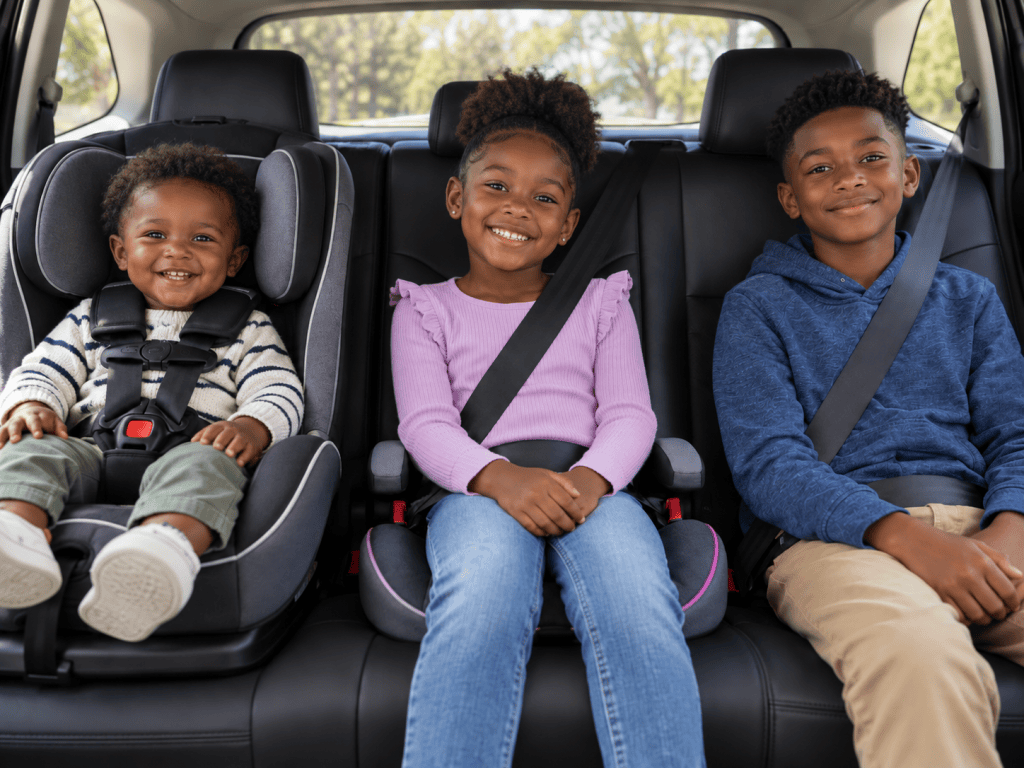
It is quite a normal sight on Ghanaian roads: a toddler sitting in the front passenger seat, sometimes on an adult’s lap, sometimes standing between the seats and occasionally even appearing to “help” Mum or Dad drive.
We have seen it so often that it barely attracts attention.
Travel with a baby in some other countries, however, and the difference is striking. The first time I had to travel abroad with an infant, moving around involved a surprising amount of logistical gymnastics. We could not simply jump into a car and hold the baby on our lap. We had to arrange for someone to pick us up with a child seat, make provision for a stroller and plan our movements around the baby.
At first it can feel inconvenient. Then the bigger point becomes obvious: safety sometimes requires planning.
Perhaps that is one of the conversations we need to have in Ghana.
Only 5.9% of children were in child seats
A recently published study on seatbelt and child-restraint use in Accra provides some uncomfortable numbers.
Researchers conducted nine rounds of observations between 2015 and 2020, covering more than 481,000 vehicle occupants. Among 3,686 children under 12 who were observed, only 5.9% were using a child safety seat. More than 93% were not.
Among children under five, child-restraint use was about 12.8%. For children aged five to 11, it fell to just 0.9%.
That should concern every parent, guardian and driver.
WHO notes that properly used child restraints can reduce deaths in crashes by as much as 71% among younger infants. Ghana’s revised road-safety framework now also links child restraints to a child’s age, height, weight and physical vulnerability.
So this isn’t about buying an expensive accessory for your car. A child seat is safety equipment.
I learnt what an airbag can do the hard way
There is another reason the sight of a toddler in the front seat worries me personally.
In 2015, on a Saturday morning, I was involved in a five-car pile-up. I was rear-ended and the airbag in the car I was driving deployed.
It did its job.
Even some of the hawkers nearby seemed amazed. I remember hearing one of them exclaim in Twi, “Heh, airbag no aboa wo ohh!”, loosely, “The airbag has really helped you.”
It had. But I also learnt very quickly that an airbag is not a soft pillow gently floating out of the dashboard.
The deployment hit me hard enough that my eyes became bloodshot almost instantly. My ears were ringing. The dust and smoke-like residue from the deployment initially made me think the car was on fire. In panic, I unfastened my seatbelt and tried to understand what had just happened.
In the weeks that followed, I saw three different eye specialists before my eye finally cleared. I also dealt with upper-back pain for months.
I was an adult, properly seated, with a seatbelt on, and the airbag was doing exactly what it had been engineered to do.
I have often wondered since then: what if a small child had been sitting in that front passenger seat?
That is not a thought experiment we should need to test.
Airbags inflate incredibly quickly. Inflation can happen in less than one-twentieth of a second, and the speed and force involved mean people positioned too close to an inflating frontal airbag can be seriously injured. It consequently recommends that children under 13 ride in the rear.
This is why a rear-facing child seat should never be placed in front of an active passenger airbag.
An airbag can save an adult’s life.
That does not mean you want a toddler sitting directly in front of one.
Ghana’s law is now much clearer
Ghana has significantly strengthened the law around carrying children.
The Road Traffic (Amendment) Act, 2025 (Act 1153) states that a person must not drive with a child who is under 12 years old in the front seat. The same restriction applies to a child who is under 145 centimetres tall and weighs less than 36 kilograms.
If such a child travels in the rear seat, the child must be properly restrained with appropriate safety equipment. The amended law also requires children under 18 travelling in either the front or rear to wear a seatbelt where applicable.
The new framework is already in force, and the Ministry of Transport began a nationwide sensitisation campaign in September 2026 around Act 1153 and the new Road Traffic Regulations, 2026 (L.I. 2519).
So the argument is no longer simply, “Parents should probably put children at the back.”
The law says they should.
But why the back seat?
Children are not simply miniature adults.
Their bodies are still developing. Their heads are proportionally larger, their necks are more vulnerable, and an adult seatbelt may not sit across the correct parts of their bodies.
Then there is the front passenger airbag.
The dashboard and airbag system have principally been designed around adult occupants. A small child sitting much closer to the dashboard can be exposed to enormous forces when an airbag deploys.
It is advised by several safety bodies that children should be properly restrained in the back seat and specifically warns against placing children in front of an airbag. It also identifies the middle rear position as generally the safest where the vehicle and child-restraint installation allow it.
So when we put a toddler in the front because we want to keep an eye on him, or because she enjoys sitting beside Daddy, we may unintentionally be placing the child closer to one of the most violently deploying safety devices in the vehicle.
What exactly is a child seat?
“Child seat” is really a convenient term for a Child Restraint System.
There isn’t one seat for every child. The restraint should match the child’s age and, more importantly, the manufacturer’s specified height and weight limits.
The progression is generally straightforward:
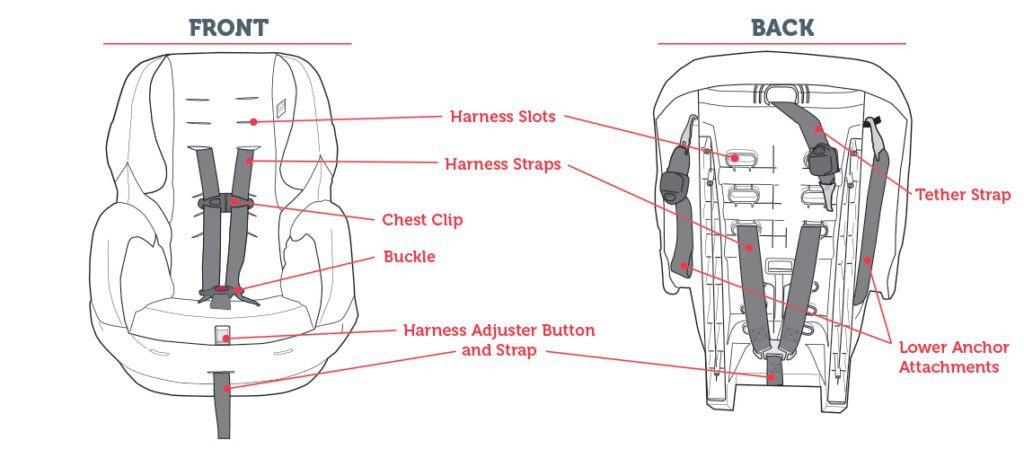
- Babies and young toddlers should travel rear-facing in the back seat for as long as their particular child seat allows. Rear-facing seats provide strong support for the head, neck and spine.
- Once the child outgrows the rear-facing limits, the next step is usually a forward-facing child seat with a harness and top tether, still in the rear.
- When the child outgrows that seat, a booster seat helps position the vehicle’s normal seatbelt correctly across the body.
- A child should use the normal seatbelt alone only when it fits properly: the lap section low across the hips or upper thighs and the shoulder belt across the chest and shoulder rather than the stomach, neck or face.
Think of it like shoes. We would not put an adult’s size-44 shoes on a three-year-old and say, “At least the child is wearing shoes.”
Safety equipment has to fit too.
But don’t drivers already know this?
Possibly.
Most modern vehicle owner’s manuals explain child restraints, airbag warnings, ISOFIX or other anchor points, appropriate seating positions and how children should be carried.
So are we not reading the manuals?
Or do we know and simply believe nothing will happen on this particular trip?
The Accra study suggests that the answer is more complicated. Research cited by the authors identifies barriers including the cost of child seats, lack of ownership, insufficient knowledge of their correct use, short journeys and the belief that having an adult hold the child is adequate.
That last one deserves special attention.
A parent’s arms may be the most comforting place in the world for a child. They are not a crash-restraint system.
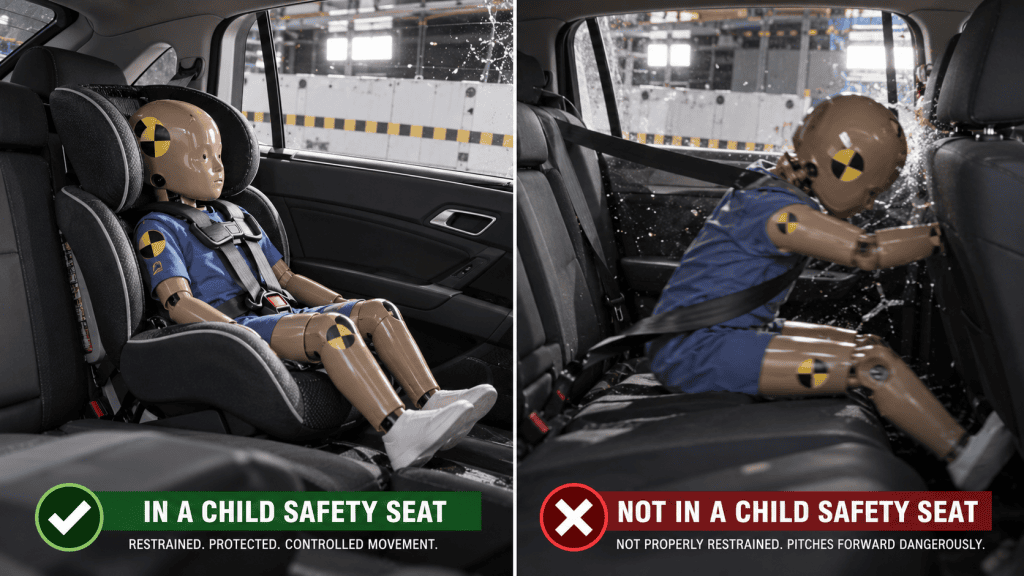
When a vehicle suddenly stops in a collision, everything inside it wants to continue moving. No matter how much you love your child, or how tightly you believe you can hold on, you cannot negotiate with physics.
“We’re only going around the corner”
Perhaps one of our biggest behavioural challenges is our attitude towards short journeys.
Home to school.
The five-minute drive to church.
A quick run to the supermarket.
A short trip down the road to visit Grandma.
Those are exactly the journeys on which putting a child into a proper restraint can feel like too much trouble.
But a collision does not know whether your destination was two minutes away or two hours away.
The routine needs to become simple:
Child in. Restraint on. Then the car moves.
Every seat. Every journey. Every time.
Enforcement has a role too
Education matters, but the Accra research gives us reason to discuss enforcement as well.
Child-restraint use was 13.3% when police were present, compared with 6.2% where no enforcement was observed.
The researchers therefore recommend a combination of sustained education, stronger enforcement covering passengers and children, not just drivers, and structural measures to make appropriate restraints available and usable.
That becomes particularly relevant now that Ghana has strengthened its law.
A law that prohibits under-12s from occupying the front seat cannot simply sit in the statute books while toddlers continue riding beside drivers every morning.
Sensitisation is necessary. But somewhere along the line, enforcement must also make compliance normal.
We already accept that motorists can be stopped for driving without a seatbelt. It should eventually feel equally unusual to see a two-year-old travelling freely in the front seat.
Change can start with private car owners
There are legitimate difficulties.
Good child restraints cost money. Some older cars make installation more challenging. Public transportation presents an even more complicated problem.
Those issues deserve broader policy discussion.
But they should not prevent those of us who own private vehicles and regularly carry young children from doing what we can now.
Check your car.
Read the owner’s manual.
Find out whether it has ISOFIX or other child-seat anchorages.
Check the child’s height and weight.
Buy an appropriate restraint that meets recognised standards.
Learn how to install it correctly.
Then actually use it.
Not only for the motorway.
Not only when travelling outside Accra.
Not only when you think the police might be watching.
Every trip.
Let’s make the back seat the important seat
Children love the front.
It feels grown-up. They can see everything. They get to sit beside Mum or Dad.
But childhood does not need to be rushed.
We need to change the idea that putting a child in the rear is somehow less comfortable, less convenient or less caring.
In reality, putting them there, properly restrained, may be one of the simplest expressions of care available to us as motorists.
I know what an airbag feels like when it deploys.
I also know what it feels like when it does its job and you walk away from a crash.
I would not want a small child sitting in front of one when that moment comes.
For our children, the best seat in the car is not beside the driver. It is at the back, in the right restraint, properly secured.
And before we move the car, perhaps the question every driver carrying a child should ask is a very simple one:
“Is everybody safe?”
Happy motoring…

Leave a Reply