
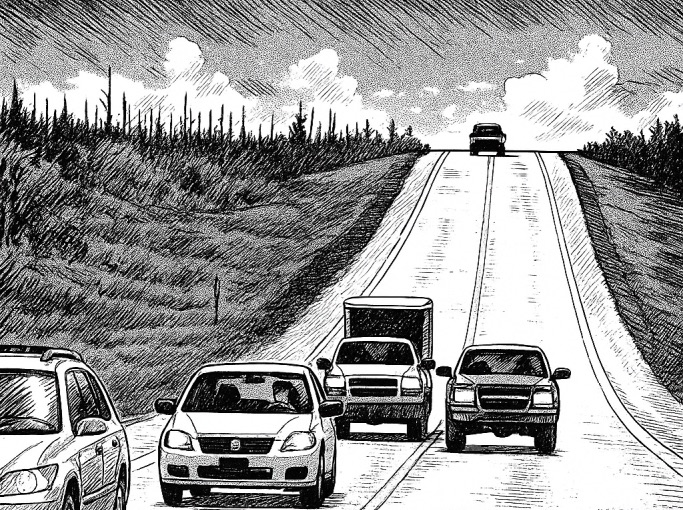
I dare say it; our usage of road lanes in Ghana is abysmal. It’s something I’ve been meaning to write about for a while, but two things this week finally pushed me over the edge. First, my friend Elizabeth shared an illustration on how to properly navigate a roundabout. A sore spot for many Ghanaian drivers. Then came a viral video of a lady completely losing her cool at a traffic stop after another driver cut into her lane.
These two moments struck a chord. I believe in lifelong learning. Every day is a classroom, and when the opportunity presents itself, I’ll always try to educate. So let’s talk about something that should be second nature to every driver, yet is so often ignored: lane discipline.
Safe lane use starts with the basics. Every vehicle should be kept centered in its lane, not hugging the edge, not drifting into the next lane, but squarely in the middle. Staying centered helps avoid side swipes and keeps traffic flowing smoothly. And that flow depends on more than just position — it also depends on speed. Driving too fast or too slow for the conditions or the flow of traffic creates unnecessary risks.
Your mirrors are your best friends on the road. Regularly checking them helps you stay aware of your surroundings, especially of vehicles in adjacent lanes or fast-approaching from behind. But mirrors alone aren’t enough. Every driver should do a quick glance over the shoulder to check blind spots before changing lanes — particularly in cities where motorcyclists, cyclists, or smaller vehicles often slip through unseen gaps.
And please, use your indicators! Signaling your intentions gives other road users time to react, whether you’re changing lanes or preparing to exit. A simple flick of the signal switch can prevent a lot of chaos.
One of the most frustrating and dangerous behaviors on our roads is straddling two lanes. It’s confusing, inconsiderate, and totally unnecessary. All wheels should stay within the boundaries of your lane unless you’re making a deliberate, safe lane change. And that brings us to the importance of reading the road. Lane markings are not suggestions, they guide the flow of traffic. Solid lines mean no switching lanes. Broken lines? Change only when safe. Arrows? Follow their direction.
Many drivers also believe that changing lanes constantly will help them get ahead faster. It won’t. Frequent, unnecessary lane changes only increase the chances of a collision and disrupt traffic. Stick to your lane unless you genuinely need to overtake, turn, or follow a directional sign.
On multi-lane roads, it’s important to understand the role of each lane. In left-hand-drive countries like Ghana, the leftmost lane is typically for faster traffic or overtaking and not cruising indefinitely. Once you’ve overtaken, return to your original lane to keep things moving efficiently.
Curves and bends are another test of discipline. Drivers must slow down before entering a curve and remain in their lane. Cutting across lines to “straighten” the curve is not only reckless but can lead to head-on collisions.
When lanes merge or you’re approaching an exit, the key is to plan ahead. Signal early, change lanes gradually, and yield if necessary. Merging abruptly at the last second is a recipe for road rage and rear-end collisions.
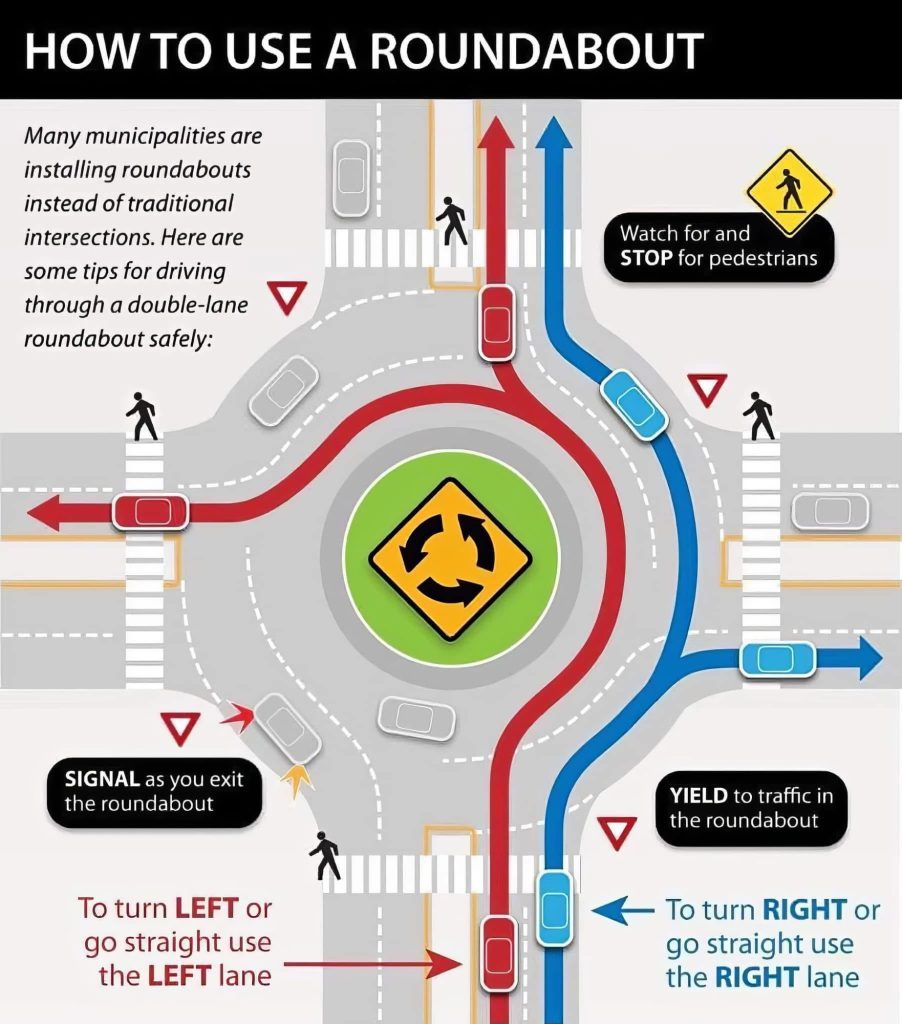
Now, let’s talk roundabout.
Ghana’s great confusion circles. Using them properly is essential for safe and efficient traffic flow, but many drivers treat them like a free-for-all.
As you approach a roundabout, slow down and watch out for yield signs. Traffic already inside the roundabout has the right of way, so be ready to give way. And don’t forget about pedestrians or cyclists — they often cross near entrances and exits.
Choosing the right lane before entering a roundabout is critical. If you’re turning right (first exit), stay to the right. If you’re going straight (second exit), follow lane markings. For left turns (third exit or more), position yourself in the left lane. These rules aren’t arbitrary — they’re designed to prevent gridlock and near-misses.
When entering the roundabout, merge smoothly and stay in your lane. Don’t swerve or switch lanes mid-roundabout. And when it’s time to exit, signal to the right and do so carefully, watching out again for anyone on foot or on two wheels.
Lane discipline isn’t just about following rules — it’s about courtesy, safety, and efficiency. If we want better traffic flow, fewer accidents, and more respect on our roads, it starts with staying in our lane — literally.
The classroom is open. Let’s learn. And more importantly, let’s do better.
Happy motoring…




Leave a Reply