
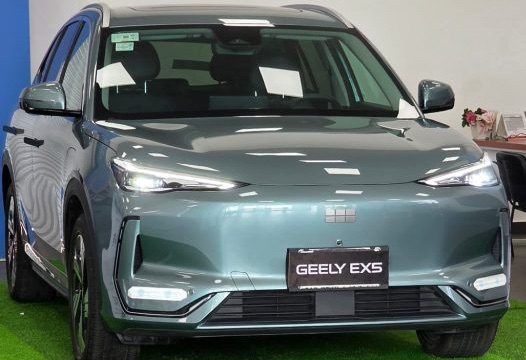
Less than two years after bringing Geely to the Ghanaian market, Japan Motors is already pushing the brand into its next phase. This time, the focus is electrification.
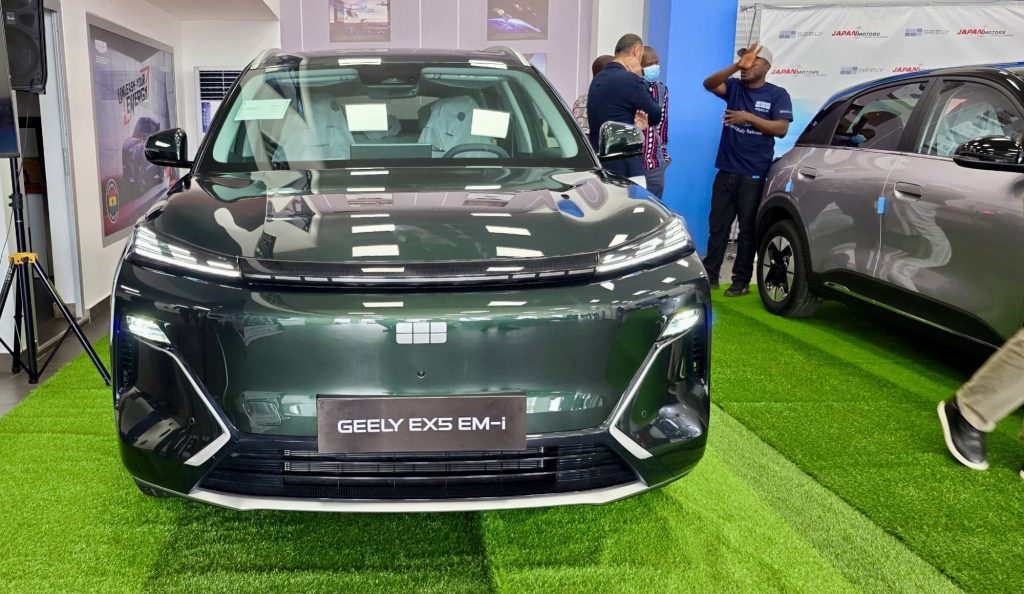
Japan Motors Trading Company has officially launched three new Geely electrified vehicles in Ghana: the Geely EX5, a fully electric SUV; the EX5 EM-i, a plug-in hybrid SUV; and the smaller EX2, a fully electric urban crossover. Rather than offering three versions of essentially the same idea, the lineup tackles three very different questions Ghanaian motorists are likely to have about electrification.
Want a proper electric family SUV with enough range to leave the city? There is the EX5.
Like electric driving but not quite ready to depend entirely on charging infrastructure? That is where the EX5 EM-i comes in.
And if most of your driving happens around Accra, Kumasi or another urban centre, the EX2 makes an interesting case for keeping things smaller and simpler.
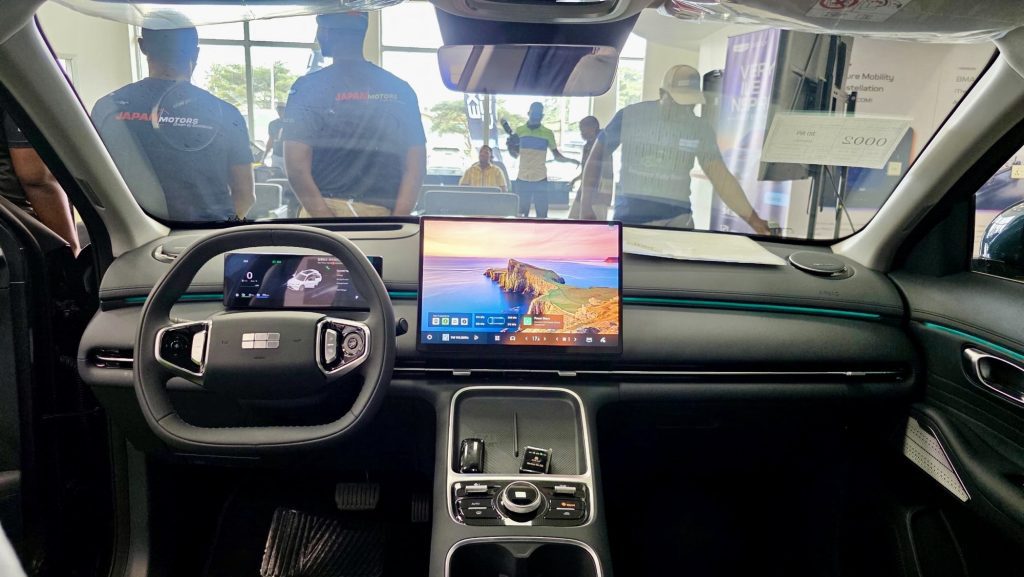
All three arrive with Geely’s Flyme Auto connected cabin technology, modern driver-assistance systems and fast-charging capability. Japan Motors is also backing the new lineup with an eight-year or 200,000 km warranty, subject to its terms and conditions.
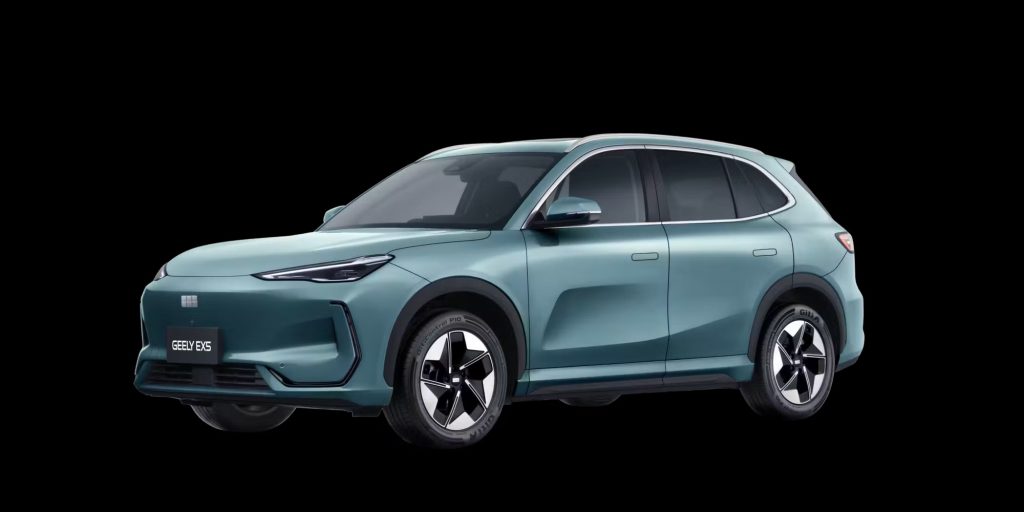
Geely EX5: the full-electric family SUV
The EX5 is the headline full-electric SUV. Its front-mounted electric motor produces 160 kW and 320 Nm, supplied by a 60.22 kWh lithium-iron-phosphate battery. Geely quotes 475 km of WLTP range, while 0–100 km/h takes a fairly brisk 7.1 seconds and top speed is 175 km/h. DC charging can take the battery from 30 to 80 percent in around 20 minutes, while the equipment list includes a 15.4-inch centre display, 10.2-inch digital instrument cluster, head-up display, ventilated and massaging front seats, 256-colour ambient lighting and a 16-speaker Flyme Sound system. It also supports V2L and V2V power sharing. In other words, Geely hasn’t treated the EX5 simply as an electric alternative; it is clearly trying to make it feel like a well-equipped modern SUV first.
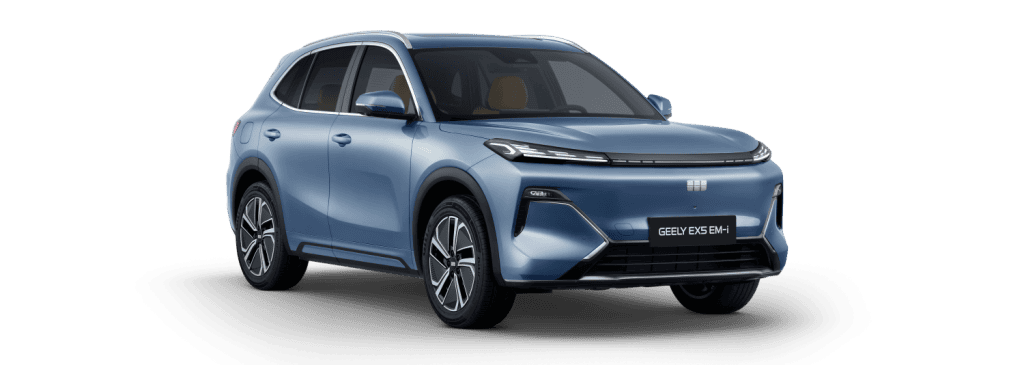
EX5 EM-i: probably the easiest transition to electrification
The EX5 EM-i may ultimately be the most interesting of the three for buyers who want electric driving without completely giving up petrol. It combines a 1.5-litre petrol engine with a 160 kW, 262 Nm electric motor and an 18.4 kWh LFP battery. The result is a quoted 943 km WLTP combined range, with 83 km of WLTP combined electric range and up to 112 km in the city under the EAER test. It still plugs in, too: DC charging from 30 to 80 percent takes about 20 minutes, while AC charging from 25 to 100 percent takes around three hours. Performance is respectable rather than outrageous, with 0–100 km/h in 8.1 seconds and a 170 km/h top speed. For Ghana, where many buyers may like the idea of doing daily commuting electrically but still want the reassurance of petrol for long trips, that combination makes a lot of sense.
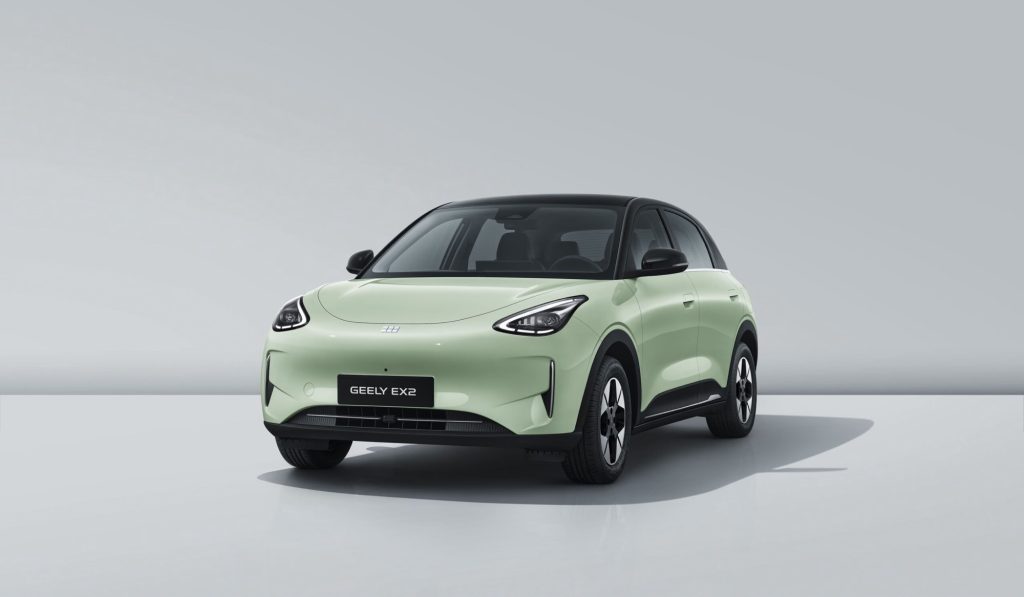
EX2: the little one with a few surprises
Then there is the EX2, and this might be the car that makes the most straightforward case for electric motoring. It is compact, seats five and uses a 39.4 kWh LFP battery for a quoted 325 km WLTP range. Its electric motor produces 85 kW and 150 Nm, driving the rear wheels, which is an unexpectedly interesting layout for a small urban EV. It takes 10.2 seconds to reach 100 km/h and supports up to 70 kW DC charging, with 30–80 percent taking around 21 minutes. Inside, there is a 14.6-inch touchscreen, an 8.8-inch digital instrument display and Flyme Auto, while higher specifications can add a 540-degree panoramic camera, adaptive cruise control, automatic emergency braking and lane-departure warning. The EX2 also offers 375 litres of luggage space, expanding to 1,320 litres, alongside the additional front storage highlighted by Geely.
More than simply adding EVs to the showroom
What is interesting here is the spread. Japan Motors has not attempted to sell electrification as one solution that must work for everybody.
The EX2 tackles urban mobility. The EX5 is the conventional family-SUV proposition, only electric. And the EX5 EM-i provides the middle ground for someone who wants the benefits of an EV without yet being willing to structure every long journey around charging.
That last point is particularly important. EV adoption is not simply about whether an electric vehicle can travel 300 or 400 kilometres. Buyers also think about where they live, where they travel, how easily they can charge and what happens when they want to drive beyond their normal routine. Offering both battery-electric and plug-in-hybrid options gives customers a choice rather than asking them to change their driving habits overnight.
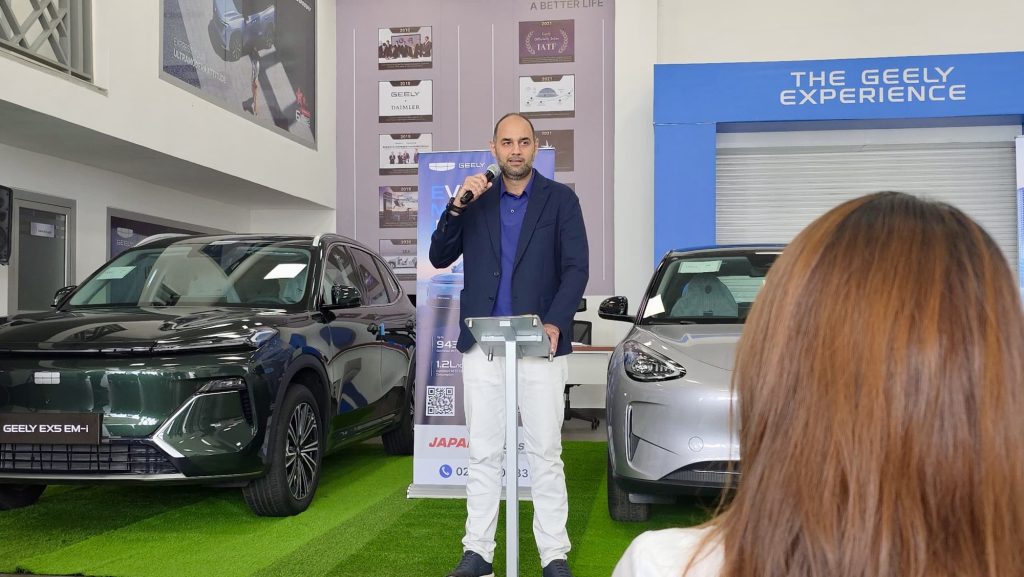
Japan Motors Managing Director Amine Kabbara put that thinking at the centre of the launch.
“Geely’s electrified lineup aligns perfectly with our commitment to delivering forward looking mobility solutions in Ghana, vehicles that feel refined, connected, and ready for real world driving needs. With the EX5 Electric, the EX5 EM-i Plug in Hybrid, and the EX2 Electric, we are giving our customers meaningful choice: long range electric driving, plug in hybrid flexibility, and compact urban efficiency, all supported nationwide by Japan Motors.”

That may ultimately be the more important part of this launch. Ghana’s transition towards electrified mobility is unlikely to happen with one type of vehicle or one type of customer. Some motorists are already ready to go fully electric. Others will want a hybrid safety net first.
Geely and Japan Motors are now offering both, plus a smaller EV for those who simply don’t need a big SUV.
And that leaves us with the interesting question: EX2, EX5 Electric or EX5 EM-i, which one makes the most sense for Ghana right now?




Leave a Reply