
A couple of months ago, I wrote an article questioning whether the Slate Truck was really the bargain many people were making it out to be.
My problem wasn’t the simplicity. In fact, I liked the idea.
A basic, repairable electric pickup without unnecessary gadgets is refreshing in an industry where vehicles seem to get more complicated and expensive with every generation.
My problem was the price.
Slate’s whole engineering philosophy is based on simplification. Fewer parts. Simpler manufacturing. A basic interior. Manual windows. No traditional infotainment system. Two doors, two seats and rear-wheel drive in its standard form.
All of that should reduce cost.
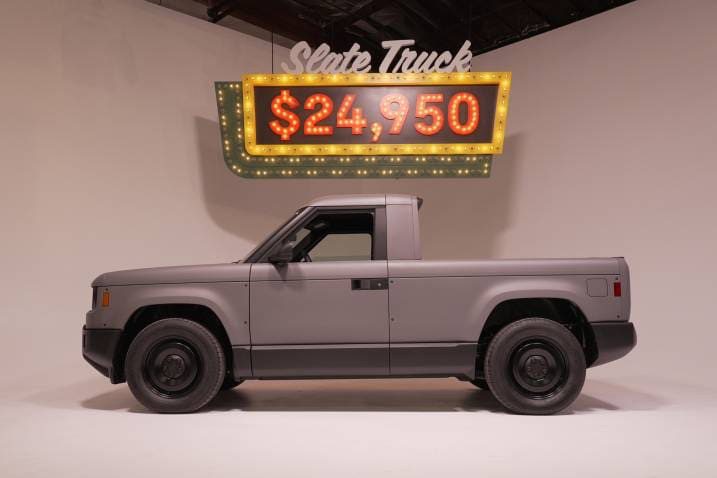
Yet the truck starts at US$24,950 before destination, or US$26,400 once the US$1,450 destination charge is included.
I asked then: is this really all US$25,000 buys today?
Ford may have just provided part of the answer.
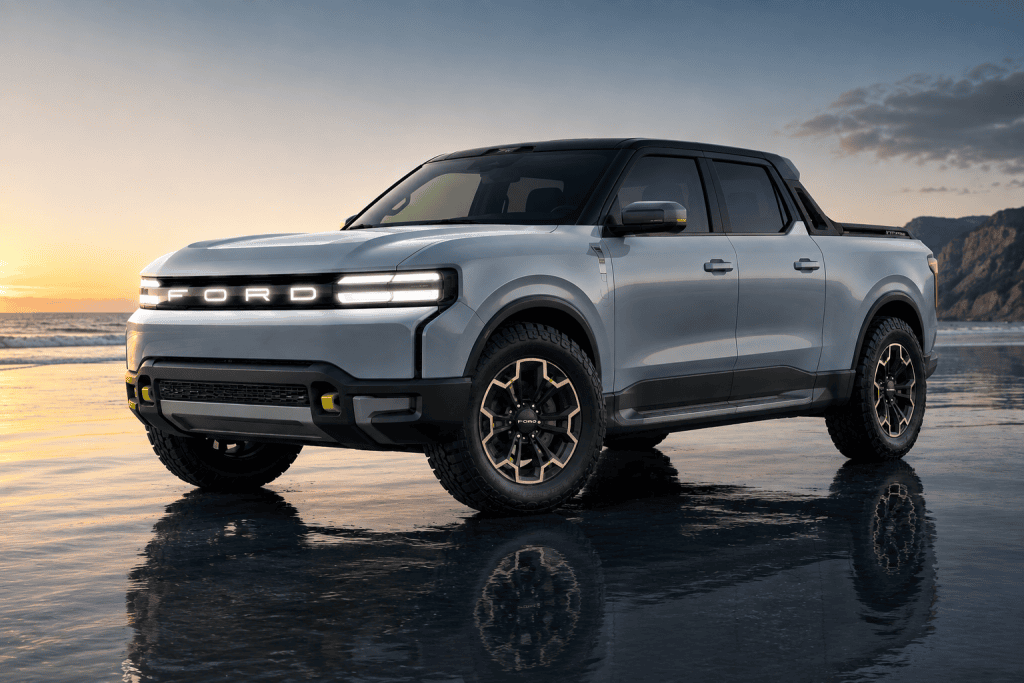
Enter the Ford Fathom
Ford has now named its upcoming affordable electric pickup the Fathom, and perhaps the most interesting number attached to it isn’t horsepower, battery capacity or range.
It’s the price.
Ford says Fathom will start at US$28,350, or US$29,945 including destination.
That puts just US$3,545 between a base Slate and a base Ford Fathom.
And that relatively small difference makes Slate’s value proposition much harder for me to understand.
Fathom is expected to be a proper four-door, five-seat pickup. Ford has confirmed a large touchscreen, wireless Apple CarPlay and Android Auto, digital key functionality, a front trunk, bidirectional power capability and the hardware required for BlueCruise.
Ford also says the cabin will offer more passenger space than a Toyota RAV4.
Slate, meanwhile, starts as a two-seat, two-door, rear-wheel-drive truck deliberately stripped of much of the equipment we now take for granted.
Again, there is nothing inherently wrong with that.
But if you’re going to give me considerably less vehicle, I expect to pay considerably less money.
A US$3,545 difference doesn’t feel considerable enough.
Slate has improved, and that deserves acknowledgement
To be fair, the Slate we’re talking about today is better than the vehicle I criticised in my original article.
Its projected range has increased to 205 miles. The latest specification lists a 65kWh lithium-iron-phosphate battery with 63kWh usable capacity.
DC fast charging is rated at up to 120kW, with Slate estimating a 20-to-80-percent charge in around 30 minutes.
Payload is now approximately 1,550lb, while towing capacity is around 2,000lb.
Those are meaningful improvements.
Slate also deserves considerable credit for its approach to repairability. The company intends to make repair information accessible to owners and is building its ownership philosophy around keeping the vehicle relatively straightforward to maintain.
Its warranty proposition is also impressive, including a 10-year/110,000-mile battery and powertrain warranty.
So my argument isn’t that Slate has built a bad truck.
Far from it.
I think Slate has built an interesting truck at the wrong price.
And Fathom makes that distinction increasingly important.
Ford and Slate are attacking the same problem differently
This is perhaps the most fascinating part of the comparison.
Both companies have recognised the same problem: new vehicles have become too expensive.
But their solutions are fundamentally different.
Slate’s approach is immediately visible to the customer.
Remove complexity from the vehicle. Reduce the number of components. Give buyers the essentials and allow them to add what they want later.
Ford appears to be taking a different route.
Instead of concentrating primarily on removing things from the customer’s vehicle, Ford has attacked the cost of building it.
Its Universal EV Platform reportedly uses around 20 percent fewer parts than a typical vehicle, 25 percent fewer fasteners and requires 40 percent fewer workstations.
Ford says the electrical harness is approximately 1.3 kilometres shorter and 10kg lighter than that of its first-generation electric SUV.
The lithium-iron-phosphate battery is structural, forming part of the vehicle floor.
Then there’s Ford’s new Universal EV Production System.
Rather than simply sending a vehicle down one traditional assembly line, Ford plans to manufacture major sections of the vehicle separately before bringing them together. Large castings replace numerous smaller components, reducing complexity and assembly requirements.
Ford says the system should ultimately improve assembly speed by around 15 percent.
Now that gets my attention.
Because this is precisely what I argued in my original Slate article.
Innovation aimed at affordability should ultimately make better technology accessible for less money.
Simplify the manufacturing, not necessarily the customer’s experience
This may ultimately be the philosophical difference between Fathom and Slate.
Slate seems to ask:
How much can we remove from the vehicle to make it affordable?
Ford seems to be asking:
How much complexity can we remove from building the vehicle while still giving customers what they expect?
I find Ford’s approach more compelling.
If large castings can replace dozens of components, fantastic.
If kilometres of wiring can disappear, excellent.
If a structural battery reduces the number of individual parts required to build the vehicle, even better.
The customer doesn’t need to notice any of those things.
What the customer notices is four doors.
Five seats.
A touchscreen.
A front trunk.
Phone integration.
Power outlets.
Driver-assistance technology.
And, most importantly, the price printed at the bottom of the invoice.
That’s the kind of simplification I want from automotive engineers.
Slate’s accessories create another problem
Slate argues that customers shouldn’t have to pay for equipment they don’t want.
There is merit in that.
Buy the basic truck and configure it around your needs.
But that philosophy works best when the starting point is genuinely inexpensive.
Once you begin adding accessories and features to Slate, the price advantage can disappear remarkably quickly.
And this is where I return to the same question I asked originally.
If Slate has substantially reduced component count, simplified production, eliminated expensive equipment and made the vehicle intentionally basic, where is the dramatic saving for the customer?
I’m not expecting a US$10,000 electric pickup.
Research and development costs money. Batteries remain expensive. Starting a new automotive company is enormously capital intensive, and Slate doesn’t have Ford’s decades of factories, suppliers, engineering knowledge and economies of scale.
I understand all of that.
But consumers don’t buy R&D programmes.
They buy vehicles.
And ultimately those vehicles have to compete with whatever else is available for the same money.
Ford hasn’t won yet
There is another important point that needs to be made.
Fathom is not yet sitting in showrooms.
And some of the numbers that will ultimately determine whether it is genuinely good value remain unknown.
Ford hasn’t revealed the standard truck’s final EPA range, battery capacity, DC charging performance, payload or towing capacity.
We also don’t know exactly how much buyers will have to spend to get different drivetrain configurations or whether the version most people actually want will remain anywhere near that US$28,350 starting price.
That matters enormously.
If the base Fathom arrives with disappointing range and Ford’s options list quickly turns the desirable version into a US$40,000 truck, this conversation changes.
Slate’s 205-mile projected range and US$24,950 starting MSRP suddenly become much easier to defend.
So Ford still has homework to do.
But my original problem with Slate hasn’t gone away
Slate has improved its truck since I first wrote about it.
I acknowledge that.
But strangely, Ford’s announcement has made me more confident about the central argument I made then.
Slate is still too expensive for what it gives you.
Not because manual windows are bad.
Not because every car needs a huge screen.
Not because two seats aren’t enough for some buyers.
And certainly not because simplicity is undesirable.
I actually want simpler cars.
But simplicity should have a meaningful financial reward.
If you remove equipment, reduce component count, simplify manufacturing and ask customers to add many conveniences later, I expect the resulting vehicle to be dramatically cheaper than a more conventional alternative.
A difference of around US$3,545 between the starting delivered prices of Slate and Fathom doesn’t currently look dramatic enough.
Perhaps Ford’s final specifications will prove otherwise.
But if Ford actually delivers a five-seat, four-door electric pickup with the equipment it has announced for US$29,945 including destination, Slate has a difficult question to answer.
Not whether its truck is clever.
It is.
Not whether its manufacturing philosophy is innovative.
It certainly is.
The question is much simpler:
Why doesn’t all that simplicity make it significantly cheaper?
A few months ago, I ended my Slate article wondering whether vehicles had become so expensive that we had lowered our expectations of what value should look like.
Ford Fathom hasn’t completely answered that question yet.
But it may be about to.
And if Ford delivers what it has promised at the price it has announced, the US$25,000 Slate Truck won’t suddenly become a bad vehicle.
It will simply become a very difficult bargain to defend.




Leave a Reply