
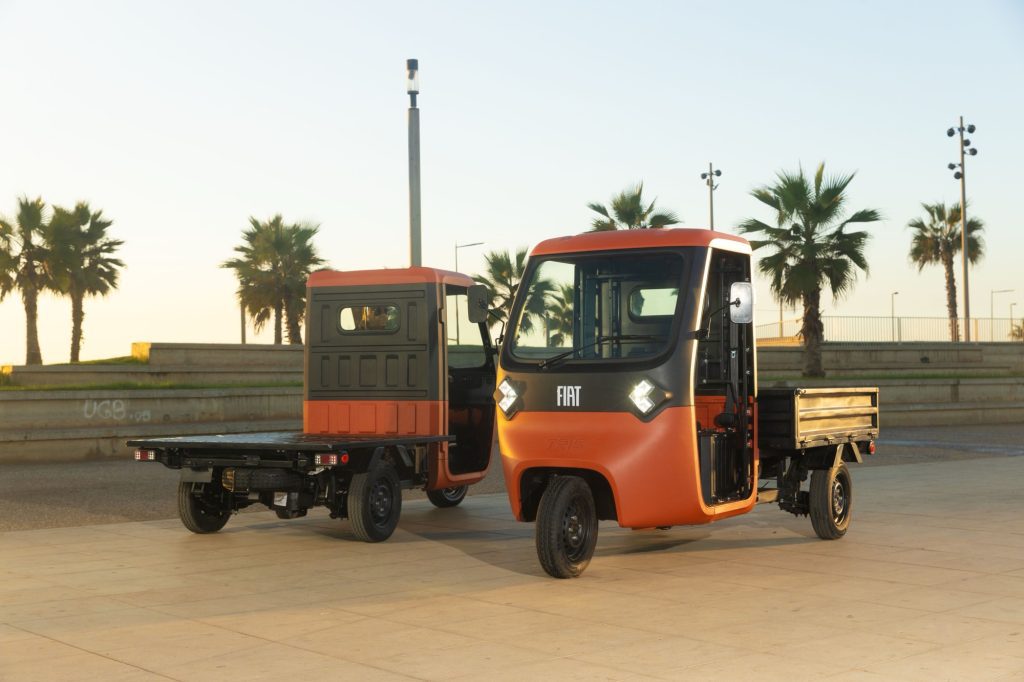
When FIAT first started talking about micromobility a few years ago, many saw it as another automotive experiment, a concept designed for crowded European cities that would struggle to find relevance elsewhere.
We at Ryde Channel saw something different.
We argued that as African cities become more congested, e-commerce expands and thousands of small businesses look for cheaper ways to move goods, there would inevitably be demand for purpose-built vehicles that sit between a motorcycle and a conventional pickup truck.
Fast forward to 2026, and FIAT appears more convinced than ever.
At the Transport Evolution Summit in Johannesburg, FIAT South Africa unveiled the TRIS, a fully electric three-wheeled pickup destined for South Africa and selected Sub-Saharan African markets from the end of the year.
Not every delivery needs a van
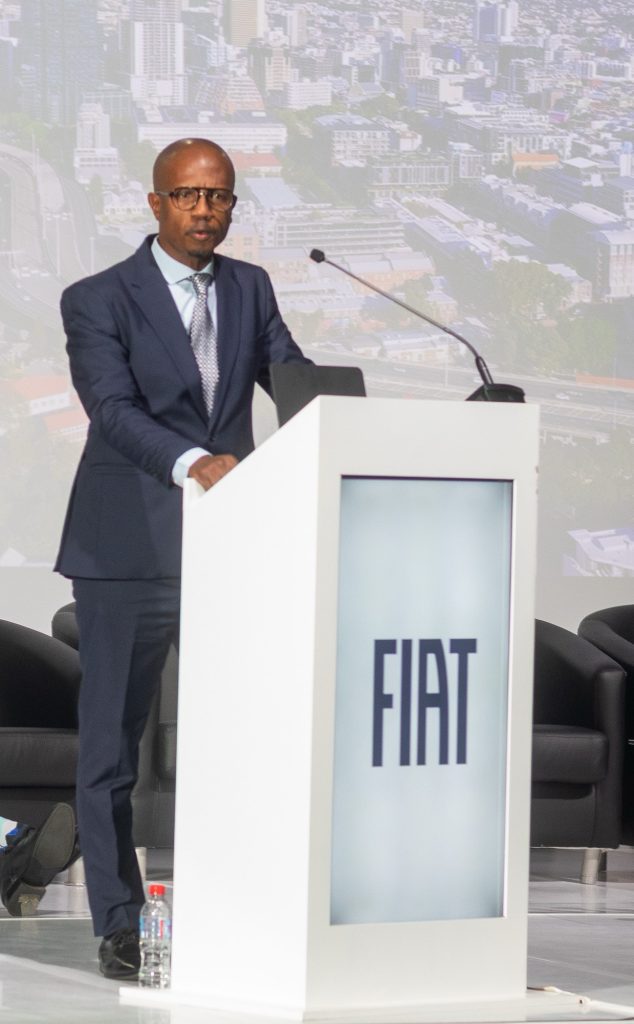
That philosophy is perfectly captured by Kabelo Rabotho, Director of Micromobility at Stellantis South Africa.
“Not every trip needs a large car. Not every delivery needs a van.”
It’s a simple statement but one that reflects changing urban realities.
Online retailers, pharmacies, food delivery services, hardware stores or neighbourhood businesses, countless deliveries involve small loads travelling relatively short distances. Using a one-ton pickup or panel van for every trip is expensive, inefficient and increasingly difficult in congested city centres.
The TRIS aims to solve that problem.
Africa already understands the concept
For anyone wondering whether Africa is ready for a vehicle like the TRIS, the answer may already be on the streets.
In Ghana, locally assembled three-wheeled cargo tricycles, mostly imported in kit form from China, with some already running on electric power, have become an essential part of everyday commerce and city services. Popularly known as “Aboboyaa,” these workhorses transport everything from fresh produce from farming communities to city markets, to construction materials, livestock feed and even sachet water for distribution across neighbourhoods and door to door refuse collection.
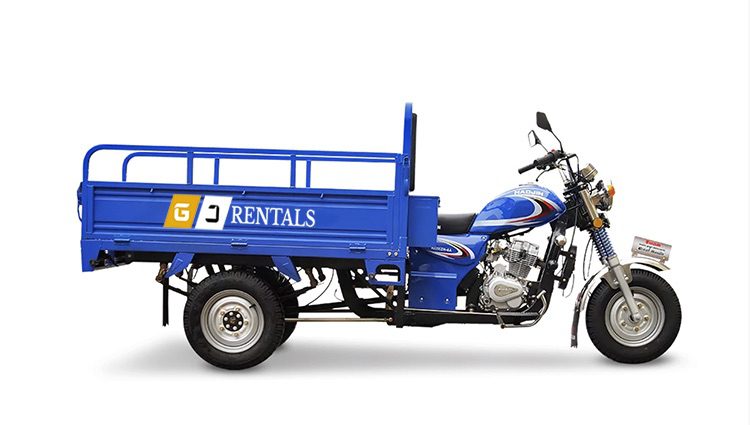
Their widespread adoption proves there is already an established market for compact, affordable cargo vehicles that can access areas larger trucks struggle to reach.
What FIAT is bringing to the table is a more refined, purpose-built solution from a global automaker, backed by modern engineering, improved safety, zero-emission technology and the support of an established dealer network.
Rather than creating a new segment, the TRIS could simply be elevating one that already exists.
Small footprint, big capability
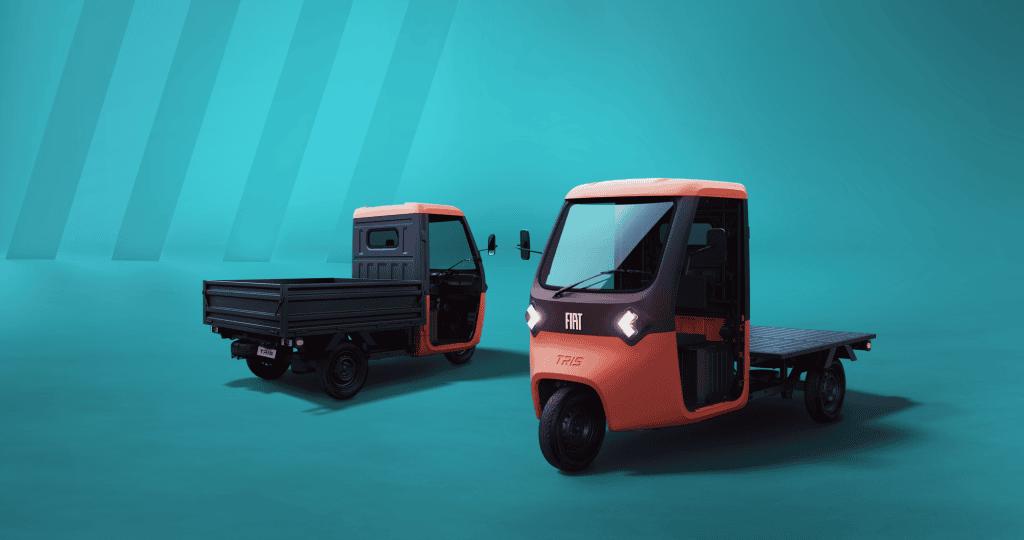
Despite measuring just 3.17 metres long, the electric three-wheeler can carry more than 500 kg of payload similar to the payload of the also popular ‘Kei’ trucks (Abossey Okai Macho) running around our big cities, while offering a practical cargo area for commercial use.
Its electric drivetrain produces 9 kW of peak power and 45 Nm of torque, giving it a top speed of 45 km/h, more than adequate for urban deliveries where traffic often moves much slower.
A 6.9 kWh lithium battery provides a claimed range of 90 km, enough for many businesses to complete an entire day’s deliveries without recharging.
Even better, owners won’t need specialised charging infrastructure. The integrated charger plugs directly into a standard 220V household outlet, reaching 80% charge in about 3.5 hours and a full charge in under five hours.
That simplicity could prove crucial in African markets where public charging infrastructure remains limited.
Designed for African entrepreneurs
Perhaps the most interesting aspect of the TRIS is its target customer.
FIAT says the vehicle is intended for independent workers, small businesses and underserved communities, positioning it as a tool for economic empowerment rather than simply another EV.
Think mobile vendors, courier operators, plumbers, electricians, municipal services, market traders and local delivery businesses.
In Ghana, it’s not difficult to imagine the TRIS replacing or competing with the familiar Aboboyaa in certain applications, offering businesses lower running costs, improved driver comfort and a cleaner image for commercial operations.
Its low operating costs, zero tailpipe emissions and easy-to-drive setup, with no clutch or gearbox, could significantly reduce the barriers to business ownership.
Could this work in Africa?
The bigger question may not be whether Africa is ready for the TRIS, but whether FIAT can price it competitively enough.
African markets have repeatedly embraced unconventional commercial vehicles when they solve real problems. The success of the Aboboyaa and Abossey Okai Macho in Ghana and similar cargo tricycles across the continent demonstrates that practicality often outweighs prestige.
If priced correctly and supported with accessible financing and aftersales service, the TRIS could become an attractive upgrade for thousands of entrepreneurs looking to modernise their businesses while reducing operating costs.
Rather than quietly experimenting with micromobility, Fiat is actively expanding the concept into emerging markets and positioning Africa as a key growth region.
That suggests this isn’t a niche side project but a strategic direction.
For Ghanaian readers especially, the concept should feel surprisingly familiar. The Aboboyaa has already shown how transformative a simple three-wheeled cargo vehicle can be for local commerce. FIAT’s TRIS is essentially the same philosophy, reimagined through the lens of a global manufacturer and an electric future.
And judging by what has already happened on Ghana’s roads, Fiat may be absolutely right.
Do you think the FIAT TRIS could become the premium electric evolution of Ghana’s beloved Aboboyaa, or will the tried-and-tested low-cost alternatives continue to dominate? Let us know in the comments.



Leave a Reply