
For years, African governments have pushed policies to grow local automotive industries. Incentives, import controls, and industrial strategies have worked, to a point.
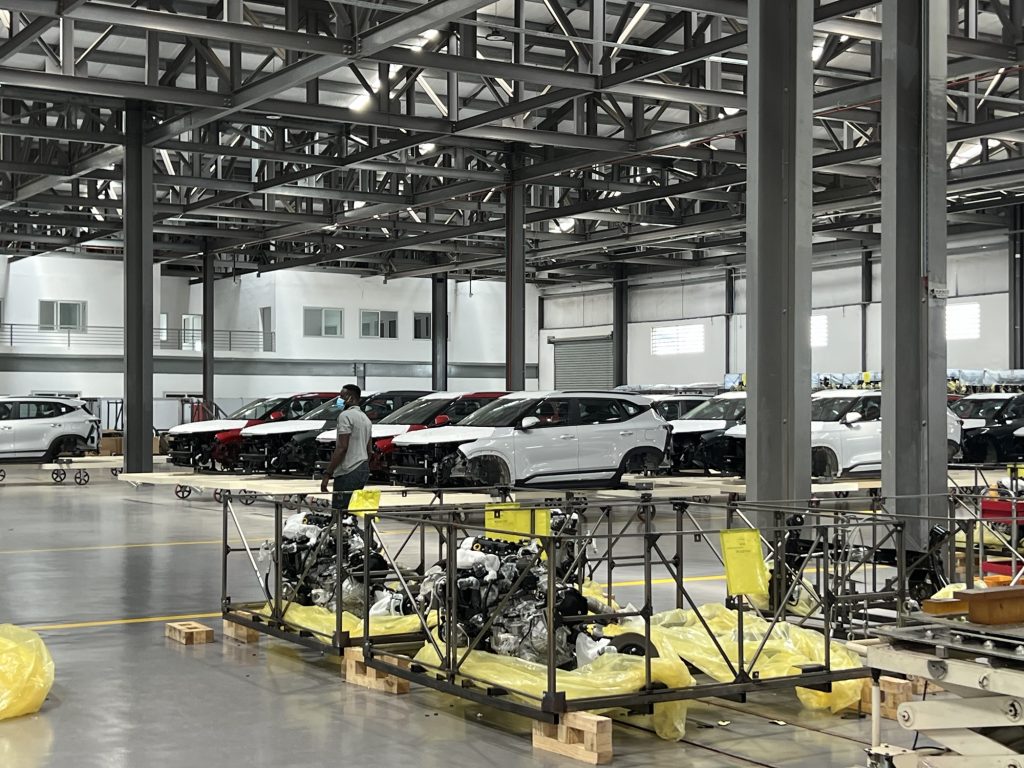
Across the continent, assembly plants have sprung up in countries like Ghana, Nigeria, Kenya, Rwanda and Cote D’voire. In addition to the already functioning manufacturing plants in South Africa, Egypt and Morocco. Yet one major question kept coming up:
If Africa is building cars, why aren’t African countries exporting them to each other?
The answer has always been the same:
Africa lacked the trade framework to make it viable.
That may finally be changing.
What has changed?
The African Union has approved Rules of Origin for automotive products under AfCFTA, meaning vehicles and components can now qualify for continental trade preferences if they meet local content requirements.
In simple terms:
• Cars with at least 40% African content can now qualify as “Made in Africa”
• These vehicles can move across participating countries duty-free or at reduced tariffs
• The rule applies to both vehicles and components
For the first time, Africa has a continent-wide definition of what counts as an African car.
Why this matters for the industry
Until now, most African assembly plants built cars mainly for their domestic markets. Exporting within Africa often meant:
• Double taxation
• High import duties
• Different standards and regulations
• Slow border procedures
This made intra-African exports more expensive than importing used cars from outside the continent.
The new framework changes that equation.
Expected benefits
1. Larger markets for African plants
Instead of producing for one country, manufacturers can now plan for regional demand.
2. Lower vehicle prices over time
Higher production volumes and reduced tariffs should gradually bring down costs.
3. More localisation
To meet the 40% requirement, manufacturers will need:
• African component suppliers
• Local manufacturing inputs
• Regional supply chains
This encourages industrial growth beyond just assembly.
4. Investment confidence
Companies invest where rules are predictable.
A harmonised trade system signals long-term commitment to industrialisation.
5. Consumer value
In the long run, buyers should see:
• More model choices
• Better pricing
• Improved service networks
• Vehicles suited to African conditions
What other factors will determine success?
Rules alone won’t build a continental car market. Several practical issues still matter.
Infrastructure and logistics
Poor roads, congested ports and slow border processes can wipe out tariff advantages.
Currency volatility
Fluctuating exchange rates still make cross-border pricing unpredictable.
Financing access
Without affordable vehicle finance, demand remains limited, even if prices drop.
Standards alignment
Countries still need to harmonise:
• Safety standards
• emissions rules
• homologation processes
Otherwise manufacturers must redesign vehicles for each market.
Supply chain depth
Africa still imports many critical components.
Localising parts production will take time and capital.
Are there downsides?
Like any industrial policy shift, the framework also carries risks.
Smaller markets may feel pressure
Countries without strong assembly capacity could see imports from stronger auto hubs rise, potentially affecting local dealers or importers.
Short-term price impact may be limited
Consumers expecting immediate cheaper cars may be disappointed.
Industrial transformation takes years, not months.
Compliance costs
Manufacturers must track and certify local content levels, adding administrative complexity.
Risk of uneven benefits
Countries with existing auto ecosystems, such as South Africa, Morocco or Egypt, may benefit faster than newer entrants unless investment spreads widely.
What this means for Africa’s automotive future
The approval of automotive Rules of Origin is not a silver bullet.
But it is arguably the first real step toward a functioning African automotive market.
For decades, Africa’s car industry has been fragmented into small, isolated markets.
This decision begins to link them together.
If governments follow through with infrastructure, financing and regulatory alignment, the result could be:
• Stronger industrialisation
• More jobs in manufacturing and logistics
• More affordable vehicles
• Greater mobility for people and businesses
In short, a system where cars are built in Africa, traded in Africa, and serving Africa.
The policy framework is now in place.
The real test will be how fast the continent turns rules into results.




Leave a Reply