
Ghana’s Kassem Odaymat and Jeffrey Peprah also take senior roles as the continental automotive body sets its sights on localisation, manufacturing and affordable mobility.
The African Association of Automotive Manufacturers (AAAM) has elected Tarek Mosaad, President and CEO of Hyundai Motor Middle East and Africa, as its new President for the 2026–2028 term, as the organisation pushes for deeper automotive industrialisation across the continent.
Mosaad succeeds Martina Biene, Chairperson and Managing Director of Volkswagen Group Africa, who led the association during the previous term and will remain involved as Immediate Past President on AAAM’s Advisory Board.
Announced in Johannesburg on August 19, the new leadership comes at an important point for Africa’s automotive industry. Across the continent, attention is increasingly shifting from simply developing automotive policies to actually translating them into assembly plants, component manufacturing, regional supply chains, investment and jobs.
What is AAAM?
Established in November 2015, the African Association of Automotive Manufacturers is a pan-African automotive industry body created to help drive the industrialisation of Africa through the development of a stronger and more integrated automotive sector. It works with governments, manufacturers, suppliers and other stakeholders on automotive policy, investment, localisation, regional value chains and trade. Its stated vision is to drive automotive industrialisation in Africa while improving sustainable and affordable mobility and promoting automotive production and trade within the African Continental Free Trade Area (AfCFTA).
That makes AAAM particularly important as African countries including Ghana, South Africa, Morocco, Egypt, Rwanda and others pursue different strategies to grow vehicle assembly and manufacturing.
AAAM has previously worked with Ghanaian stakeholders around the country’s Automotive Development Policy and efforts to attract both vehicle manufacturers and component suppliers.
New leadership spans Africa
Mosaad will be supported by five vice-presidents representing the continent’s major automotive regions as well as the component manufacturing industry.
The AAAM office bearers for 2026–2028 are:
- President: Tarek Mosaad — President and CEO, Hyundai Motor Middle East and Africa
- Vice-President, North Africa: Ankush Arora — CEO, Al Mansour Automotive
- Vice-President, East Africa: Serge Kamuhinda — CEO, Volkswagen Mobility Solutions Rwanda
- Vice-President, West Africa: Kassem Odaymat — COO, Rana Motors
- Vice-President, Southern Africa: Billy Tom — President, Isuzu Motors South Africa
- Vice-President, Components: Dr Markus Thill — President, Africa Region, Bosch
For Ghana, the appointments are particularly noteworthy. Rana Motors COO Kassem Odaymat will represent West Africa as vice-president, giving Ghana’s automotive industry a direct voice within AAAM’s continental leadership.
There is further Ghanaian representation on the association’s newly constituted Advisory Board, with Volkswagen Ghana CEO Jeffrey Peprah serving as the West Africa representative.
From automotive policies to actual production
AAAM CEO Victoria Backhaus-Jerling said the collective experience of the incoming leadership would be important as the organisation works with governments, development institutions and industry partners to move from policy development towards implementation.

The association says its priorities include creating coherent automotive policies, increasing localisation, attracting investment and building regional production and trade through AfCFTA.
That last point could prove particularly important.
Africa remains a collection of relatively small individual new-vehicle markets compared with major automotive regions elsewhere in the world. Building vehicles exclusively for individual national markets can therefore make achieving competitive production volumes difficult. A more integrated continental market potentially gives manufacturers and component suppliers a much larger customer base to work with.
This is where AfCFTA, regional automotive value chains and common industrial policies could become crucial to Africa’s automotive ambitions.
Mosaad: Africa has significant potential
Mosaad said his presidency would focus on bringing governments, manufacturers, suppliers, financiers and development partners closer together.
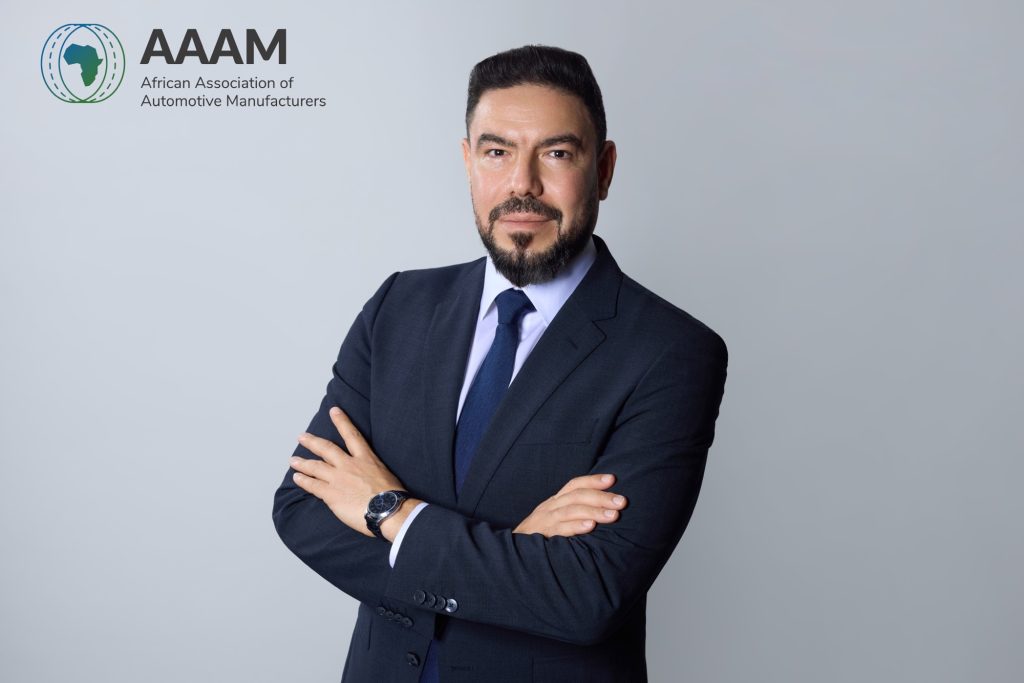
“Africa presents significant opportunities for automotive growth, but realising this potential will require greater alignment between governments, manufacturers, suppliers, financiers and development partners,” he said.
He added that he intends to build on the work of the previous leadership while helping expand vehicle production, strengthen regional value chains and improve access to affordable and sustainable mobility.
Advisory Board brings experience, and another Ghana connection
AAAM has also established an Advisory Board intended to retain institutional knowledge while giving the organisation broader regional perspectives.
It comprises:
- Martina Biene, Chairperson and Managing Director, Volkswagen Group Africa — Immediate Past President
- Mike Whitfield, Managing Director, Stellantis South Africa — Past President
- Bronwyn Kilpatrick, Senior Vice-President: Corporate, Toyota South Africa — Southern Africa representative
- Jeffrey Peprah, CEO, Volkswagen Ghana — West Africa representative
- Dr Ahmed Fikry, Managing Director, East Port Said and Egyptian German Automotive — North Africa representative
Biene said the organisation had strengthened its position as a continental automotive voice by bringing OEMs, component manufacturers, governments and other institutions together around the goal of developing a competitive and sustainable African automotive industry.
Why the next few years matter
The leadership change may sound like corporate housekeeping, but the agenda sitting in front of AAAM is considerably bigger.
Africa wants to move from being primarily a consumer and importer of vehicles to capturing a greater share of the economic activity that comes from assembling vehicles, producing components, developing skills and creating regional supply chains.
For markets such as Ghana, the challenge is no longer simply attracting a manufacturer to assemble vehicles locally. The bigger test is creating enough scale, localisation and regional trade to make those operations competitive over the long term.
AAAM says its new leadership will continue working with governments, continental institutions and the private sector to develop enabling policies, increase local content, build skills, mobilise investment and strengthen cross-border automotive value chains.
It will also continue advocating for an inclusive transition towards new-energy vehicles and emerging mobility technologies, while ensuring that Africa’s push towards cleaner mobility does not come at the expense of affordability or industrial development.
With Hyundai now occupying the presidency and senior executives from Isuzu, Volkswagen, Bosch, Al Mansour Automotive and Ghana’s Rana Motors among the new office bearers, AAAM’s 2026–2028 leadership represents a broad cross-section of the industry.
The bigger measure of success, however, will be what happens beyond the boardroom: more vehicles built in Africa, more African-made components inside those vehicles, more intra-African automotive trade, and ultimately, more affordable mobility for African consumers.

Leave a Reply